We’re all familiar with the black south facing solar modules installed parallel to the plane of the roof but what are some other options?
Tilted Solar
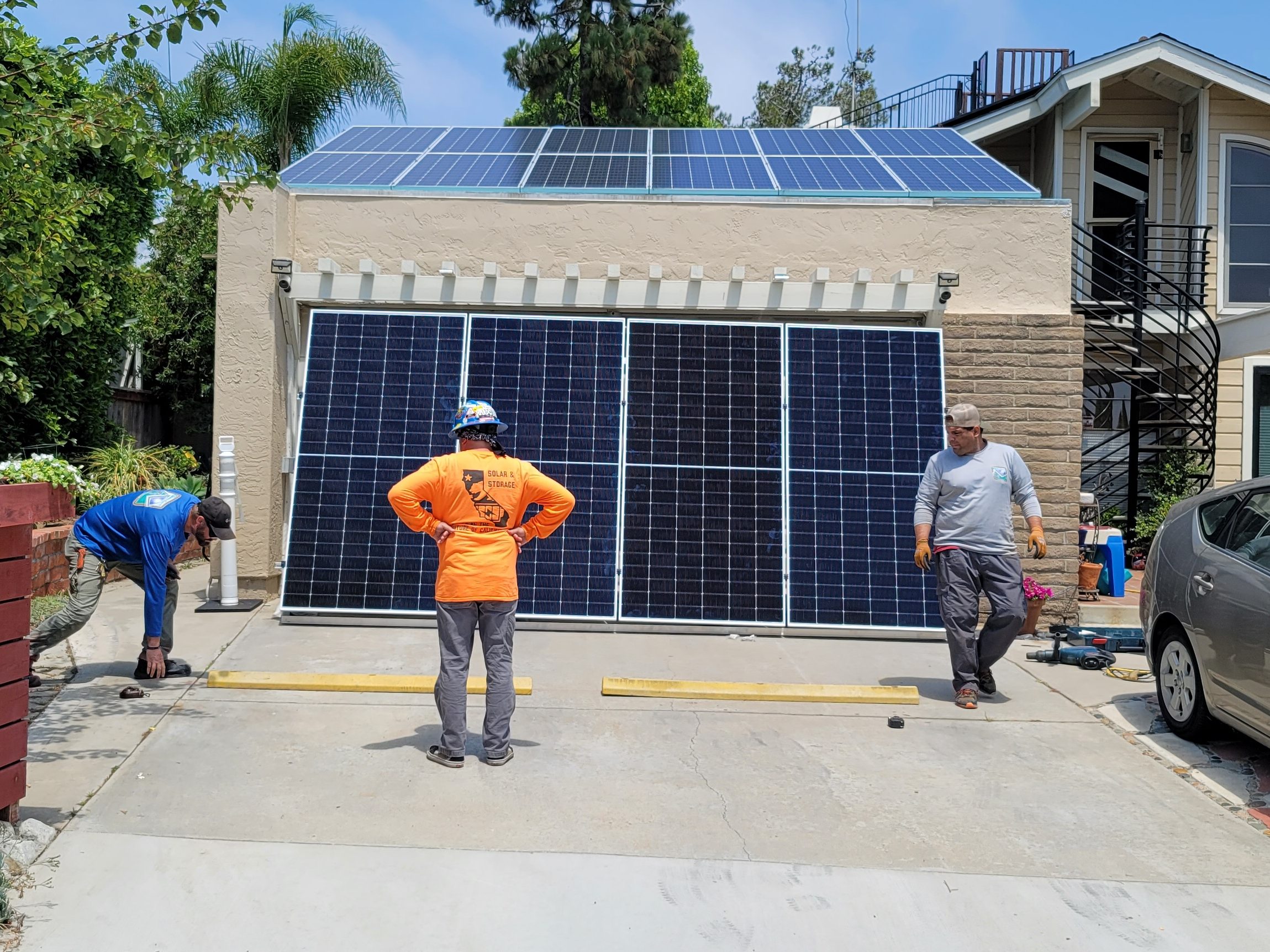
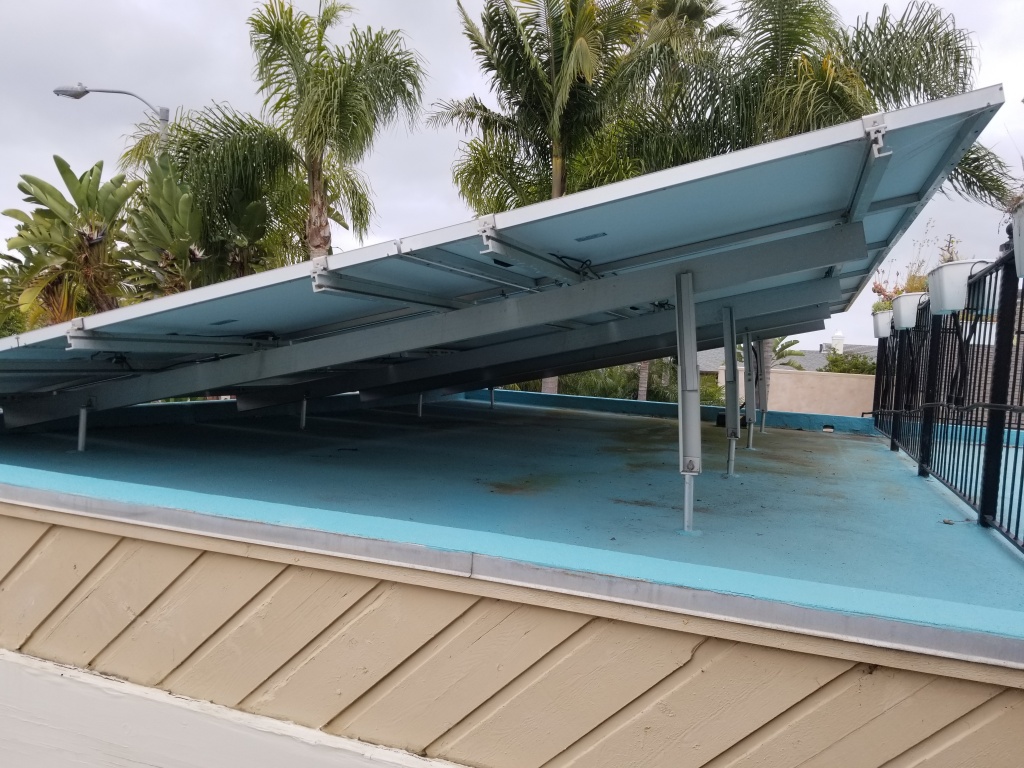
Occasionally, we come across a home where the north facing roof is the best roof for a solar installation but the energy production won’t be very good. We have a solution for that. We install reverse tilt modules. Reverse tilt installations lifts the modules off the plane of the roof towards the south. Depending on the energy production levels, this type of installation can be the most viable option on some properties.
Find out how Green Energy EPC by Makello can help you.
Ballasted Solar
Tilted racking is frequently used on flat or low slope roofs to lift the solar modules resulting in better energy production. Tilted racking installed on the right roof as a ballasted system requires zero roof penetrations. The weight of the ballast is what secures the solar modules and keeps them from blowing away in windy conditions. The roof structure does need to be able to hold the added weight of the ballasts. Ballasted systems are frequently used in commercial installations but they are also used in appropriate residential installations.
Solar Canopy
A HOA can adapt the idea of installing a solar canopy to common areas around pools, tot lots, exercise areas or open space. Solar canopies provide shade and energy production creating a two for one capital improvement project. The project may be large or small depending on the needs of the community. There are systems that can shade a single picnic table with outlets for phone and laptop charging creating a fun outdoor work or study space or system that can cover the tot lot, sandbox, or even pole mounted systems creating solar “trees”. Tilted or flat, solar installed on canopies isn’t limited to covering parking areas.

Solar installations on a canopy are becoming more popular. Canopies are frequently flat and may not always provide the highest energy production but they can be a very attractive and acceptable alternative to installing on a building rooftop.
Carport, patio cover and canopy solar installations may be done with the typical black paper backed solar modules but more and more designs are incorporating modules that have transparent areas around the solar cell such as modules produced by Lumos. One installation using Lumos Modules in San Diego can be found at Coasterra restaurant on Harbor Island. The modules create a very pleasant covered outdoor dining space on the waterfront.
BIPV Solar
Architects are becoming increasingly interested in integrating photovoltaic modules into the building structures. These types of uses of solar modules are an interesting adaptation of the technology in tight urban spaces and high rises where there are large amounts of wall space but relatively little roof space available for solar installations. This installation type is referred to as BIPV or Architectural Solar and can be used to stunning effect.
Anywhere a transparent pane of glass that receives direct sun, a solar module can theoretically be installed. This opens up a wide range of possibilities from solar building envelopes, balustrades, awnings, fencing, pedestrian walkway cover, monumental entry, or even the flooring of a roof deck or solar paving. BIPV might be retrofittable but many uses require planning in the pre-construction phase.
One company offering a variety of options in BIPV or Architectural Solar is Mitrex and they have a range of products available for use in mid-rises and high rises including solar railing, glass and cladding. The efficiency rating on the products is not listed on the website but is most likely on the lower end due to the type of solar technology they are using and the angle of the solar system installation. Due to the amount of space available on a typical mid-rise or high rise, there is justification for the trade off of aesthetic design over maximum efficiency per square foot.
There are a lot of researchers and manufacturers out there investigating the effectiveness of different types of solar applications and learning how far the technology can be expanded. There are increasingly more and more options for solar installations as people apply their imagination to solutions and create aesthetic and efficient solar equipment. Please remember to check with your local permitting office for local guidelines before installing solar.
Whatever your dreams for your HOA common area, Green Energy EPC by Makello is happy to work with you to find an option that fits your budget and makes your dreams come true.
Green Energy EPC by Makello CA Lic # 1110498


