We’re all familiar with the black south facing solar modules installed parallel to the plane of the roof but what are some other options?
Tilted Solar
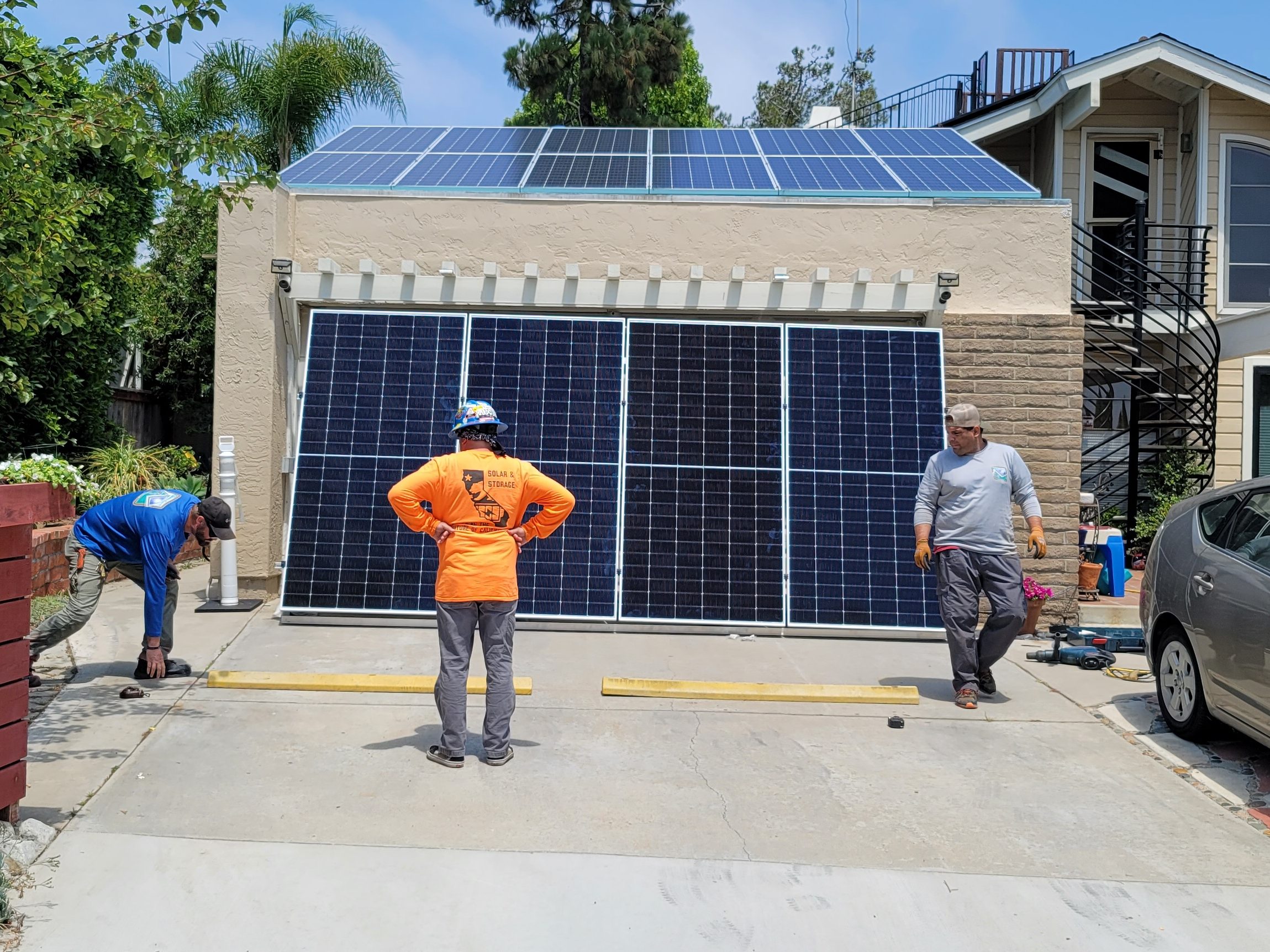
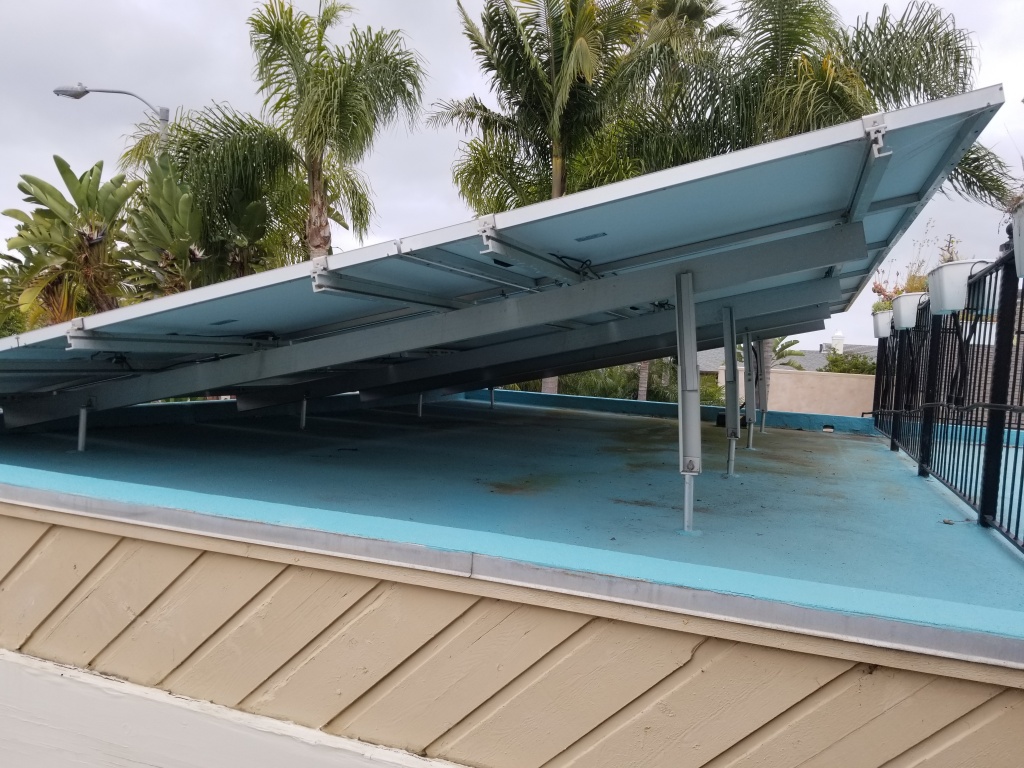
Occasionally, we come across a home where the north facing roof is the best roof for a solar installation but the energy production won’t be very good. We have a solution for that. We install reverse tilt modules. Reverse tilt installations lifts the modules off the plane of the roof towards the south. Depending on the energy production levels, this type of installation can be the most viable option on some properties.
Seasonally adjustable tilted rack photovoltaic installation on a Miracoat fiberglass deck.
Find out how Green Energy EPC by Makello can help you.
Ballasted Solar
Tilted racking is frequently used on flat or low slope roofs to lift the solar modules resulting in better energy production. Tilted racking installed on the right roof as a ballasted system requires zero roof penetrations. The weight of the ballast is what secures the solar modules and keeps them from blowing away in windy conditions. The roof structure does need to be able to hold the added weight of the ballasts. Ballasted systems are frequently used in commercial installations but they are also used in appropriate residential installations.
Solar Canopy
A HOA can adapt the idea of installing a solar canopy to common areas around pools, tot lots, exercise areas or open space. Solar canopies provide shade and energy production creating a two for one capital improvement project. The project may be large or small depending on the needs of the community. There are systems that can shade a single picnic table with outlets for phone and laptop charging creating a fun outdoor work or study space or system that can cover the tot lot, sandbox, or even pole mounted systems creating solar “trees”. Tilted or flat, solar installed on canopies isn’t limited to covering parking areas.
Charlie Johnson, Makello CEO, and Sam Syed, President, Green Energy EPC, celebrate completion of a recent project where the HOA chose to install solar and add a picnic area under the solar canopy in a common area capital improvement project. Sales: Makello, Installer: Green Energy EPC.
Solar installations on a canopy are becoming more popular. Canopies are frequently flat and may not always provide the highest energy production but they can be a very attractive and acceptable alternative to installing on a building rooftop.
Carport, patio cover and canopy solar installations may be done with the typical black paper backed solar modules but more and more designs are incorporating modules that have transparent areas around the solar cell such as modules produced by Lumos. One installation using Lumos Modules in San Diego can be found at Coasterra restaurant on Harbor Island. The modules create a very pleasant covered outdoor dining space on the waterfront.
BIPV Solar
Architects are becoming increasingly interested in integrating photovoltaic modules into the building structures. These types of uses of solar modules are an interesting adaptation of the technology in tight urban spaces and high rises where there are large amounts of wall space but relatively little roof space available for solar installations. This installation type is referred to as BIPV or Architectural Solar and can be used to stunning effect.
Anywhere a transparent pane of glass that receives direct sun, a solar module can theoretically be installed. This opens up a wide range of possibilities from solar building envelopes, balustrades, awnings, fencing, pedestrian walkway cover, monumental entry, or even the flooring of a roof deck or solar paving. BIPV might be retrofittable but many uses require planning in the pre-construction phase.
One company offering a variety of options in BIPV or Architectural Solar is Mitrex and they have a range of products available for use in mid-rises and high rises including solar railing, glass and cladding. The efficiency rating on the products is not listed on the website but is most likely on the lower end due to the type of solar technology they are using and the angle of the solar system installation. Due to the amount of space available on a typical mid-rise or high rise, there is justification for the trade off of aesthetic design over maximum efficiency per square foot.
There are a lot of researchers and manufacturers out there investigating the effectiveness of different types of solar applications and learning how far the technology can be expanded. There are increasingly more and more options for solar installations as people apply their imagination to solutions and create aesthetic and efficient solar equipment. Please remember to check with your local permitting office for local guidelines before installing solar.
Whatever your dreams for your HOA common area, Green Energy EPC by Makello is happy to work with you to find an option that fits your budget and makes your dreams come true.
You are working a solar company and they have a lot of questions to determine the optimal system size that best matches your energy goals. Now you’ve been asked to download your SDGE Energy Usage data. There’s Green Button Data, Utility API Authorization, Two-Factor Verification or any other number of options. What do you need to do and how do you do it?
At Makello, we request either downloading Green Button data in 15 minute intervals from your SDGE account or to authorize Utility API collection of data on your behalf and this article will focus on those methods.
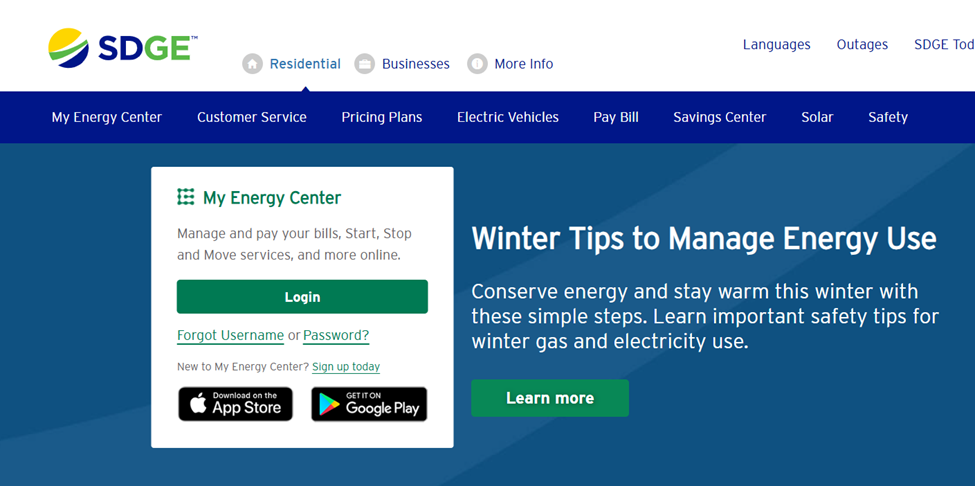
The first step to downloading your interval data from SDGE My Energy Center is to navigate to https://www.sdge.com/
Click on Login in the home page if you have already set up an online account to view your SDGE bills. First Time Users of SDGE My Energy Center should click on Set Up Today and follow the steps to register. You may have to login after registration. If you have two factor authentication activated, you will be asked to enter in a code that is sent to the email or phone number you have on file.
Green Button Data Download
After successful log in, you will see your dashboard. The dashboard design may vary due to your enrollment in a Community Choice Aggregator or not.
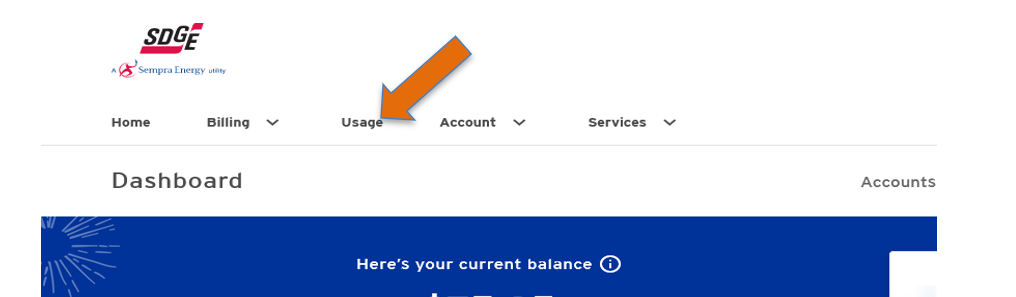
Click on the Usage tab at the top of the dashboard.
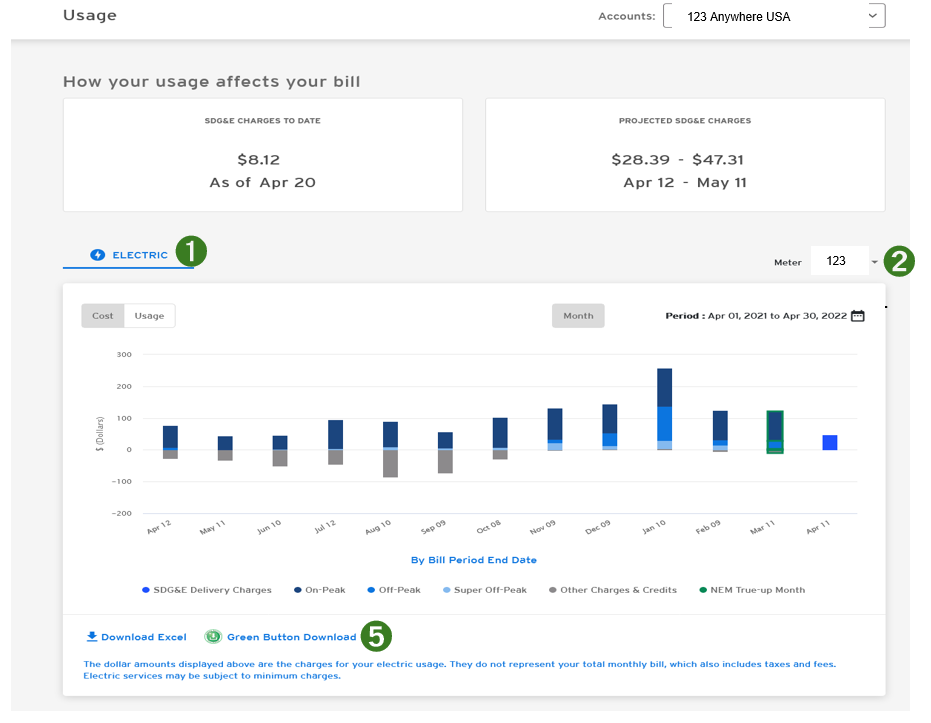
You can download your data from your Usage page. 1. Select Usage from the drop down menu in the Usage Tab. 2. Select your electric Meter from the drop down menu on the right side of the page. 3. Scroll down to the bottom of the page. 4. In the bottom left corner, you will see button for Download Excel and Green ButtonDownload. 5. Click on Green Button Download to download data.
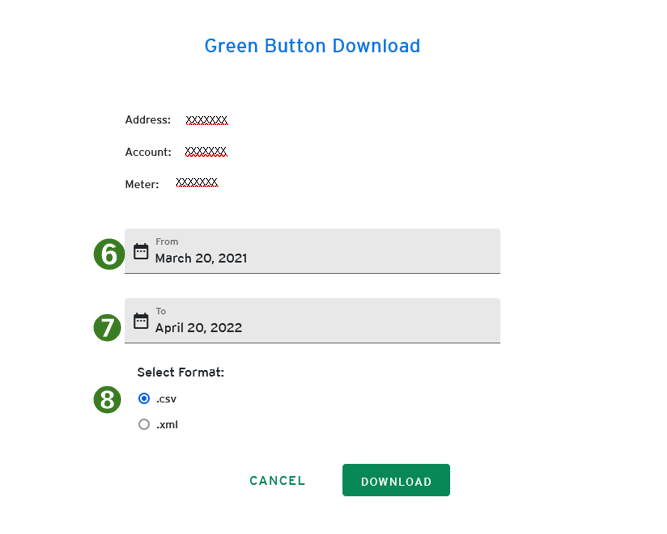
6. Set the date in the drop-down tab to download as many months of data as possible. Twelve (12) full months of data is preferred but one month of usage data is needed if available. 7. Under the Select Format heading, click .csv button (this step applies to electric meters only), then click download. 8. Under the Select Format heading, click .xml button, then click download (this step applies to both gas and electric meters for customers with both types of meters). 9. Repeat steps 1-8 for each meter that services the property, gas and electric.
Turning SDGE Two Step Verification Off or On
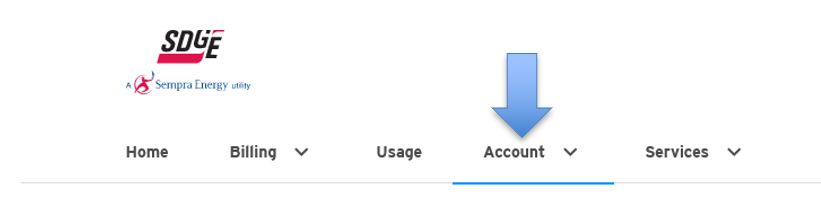
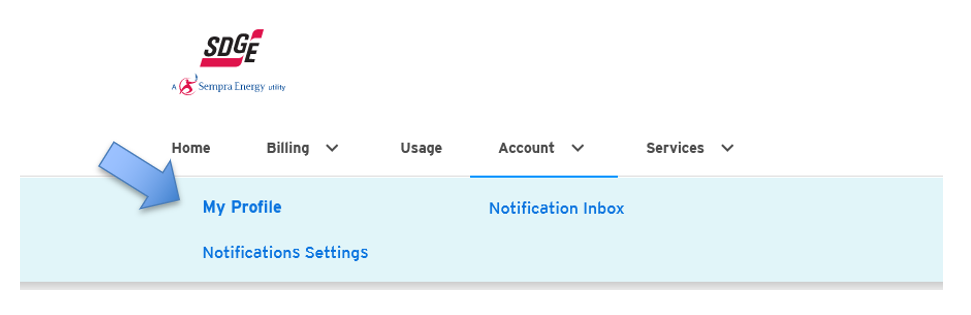
Turn 2 Step Verification off or on by clicking on Account in menu bar.
Then select My Profile from the drop down menu.
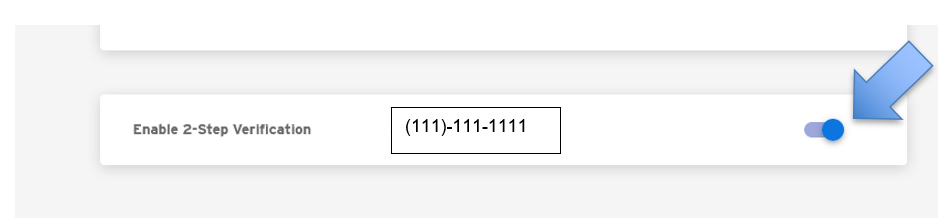
Scroll to the Enable 2-Step Verification section and click on the blue button on the right side of the screen to turn off the 2 Step Verification.
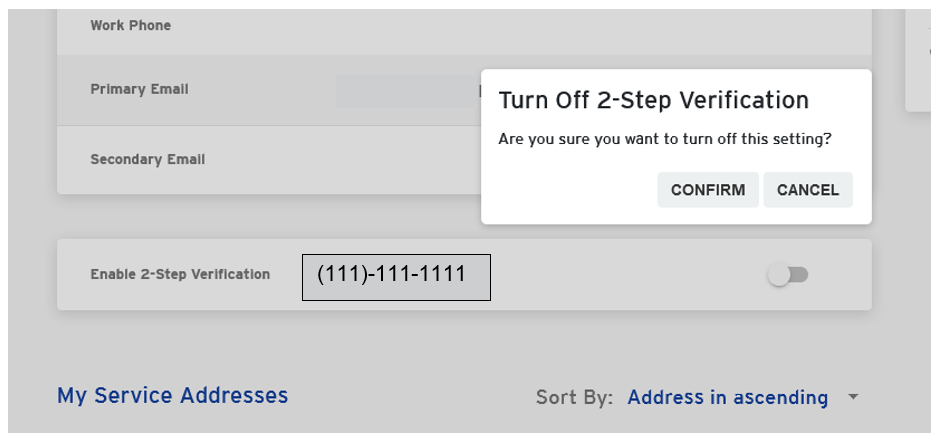
Click on Confirm in the pop up menu.
You have turned off the 2 Step Verification. Please note: 2 Step Verification must be completed prior to authorizing Utility API data collection.
To Turn 2 Step Verification back on, simply return to your Account, select My Profile, scroll down to Enable 2-Step Verification and click on the grey button on the right side of the screen, click on Confirm.
Authorization of Utility API Data Request via Link
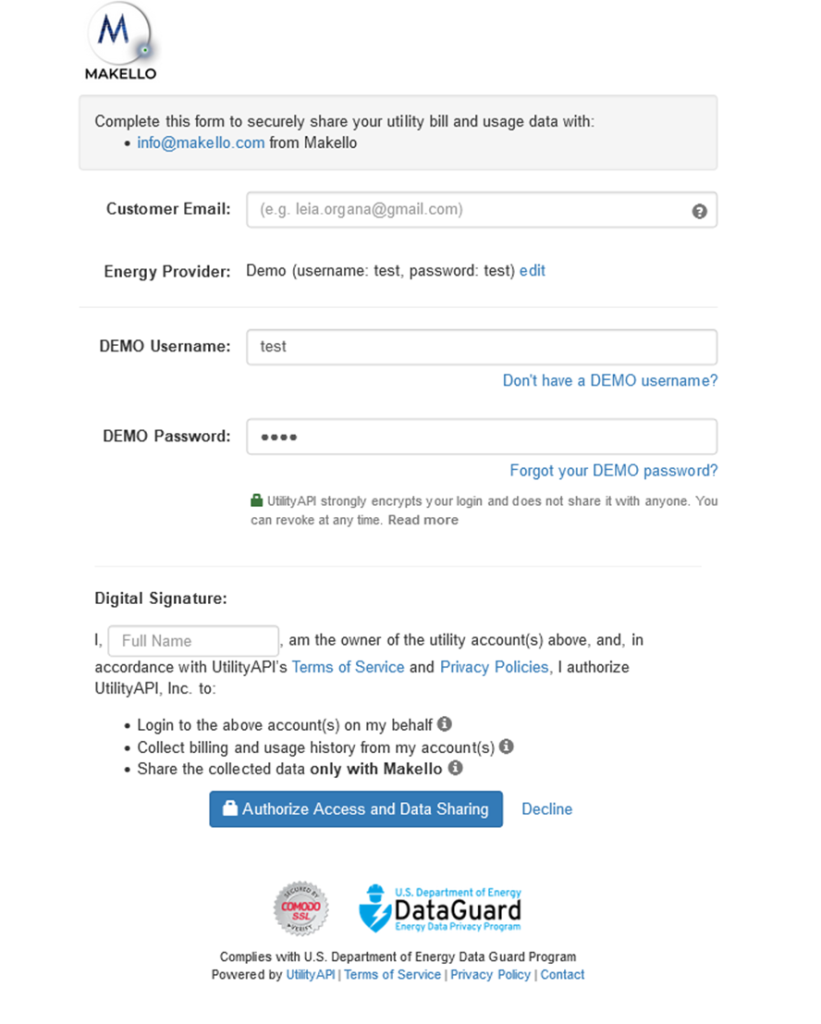
Please click on the Utility API Authorization link provided by Makello in the email you received.
You should be brought to a screen similar to the picture below. Please provide the requested information and click Authorize Access and Data Sharing.
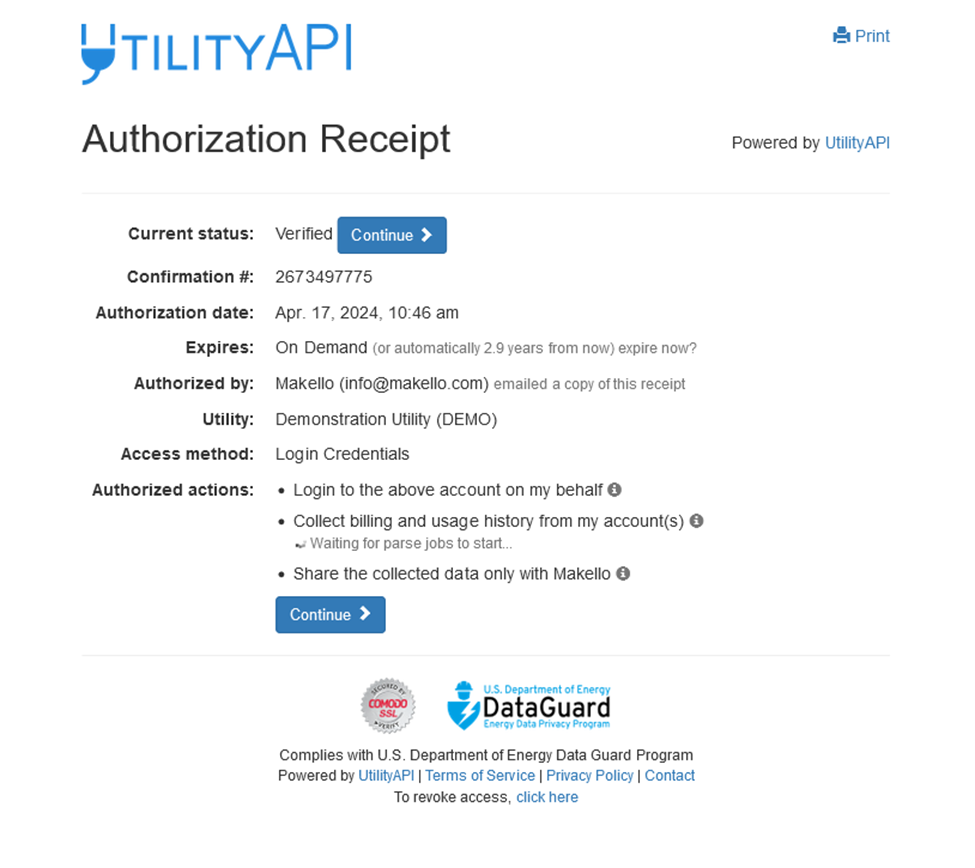
You should receive an authorization receipt similar to the picture below after authorization has been completed.
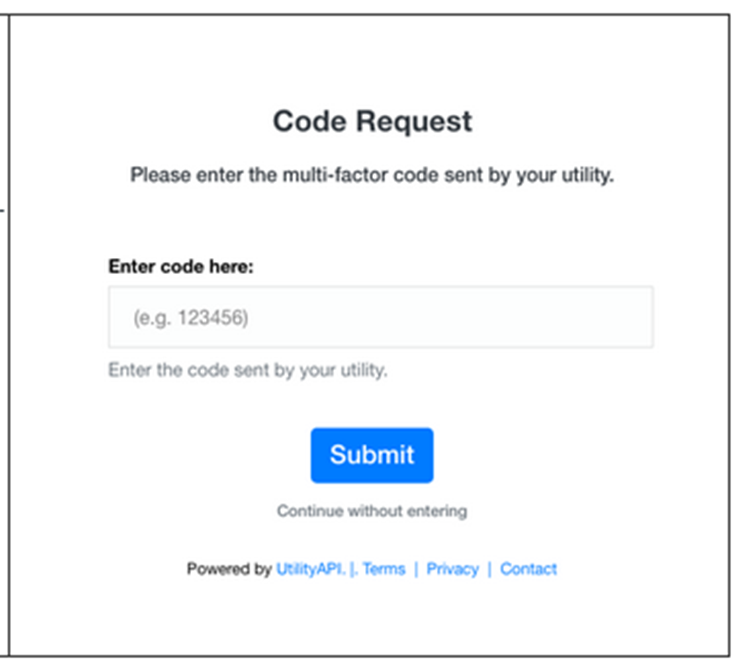
If your SDGE account has two-step verification, you should then receive a two-step verification code from SDGE sent via text message. Please enter the code in the space provided. An example of the screen where you enter the two-step verification code provided in the image below.
Alternatively, you may manually deactivate and reactivate the multi-step verification for your SDGE by following the steps previously outlined.
Please note: 2 Step Verification must be completed prior to authorizing Utility API data collection.
Utility API Data Collection Refresh Historical Data
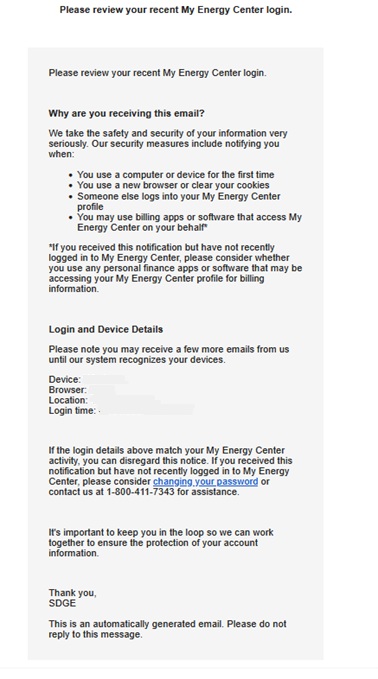
When Utility API Refreshes Data via a new collection, you may receive a message informing you of the activity on your account.
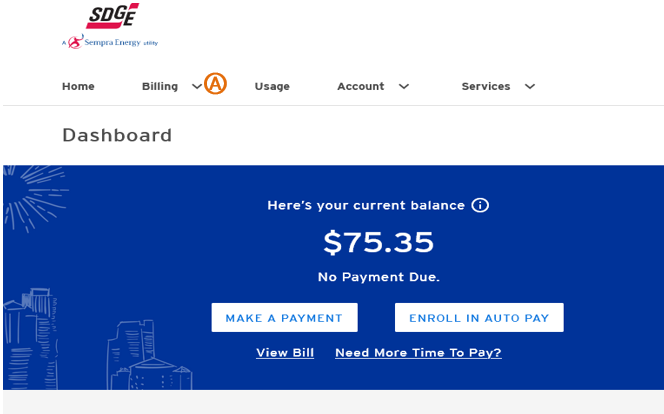
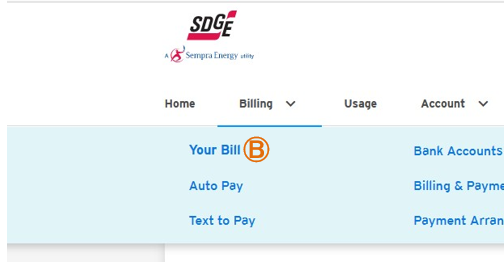
A. Click on Billing drop down menu at the top right of your dashboard.
B. Click on Your Bill from the Billing drop down menu.
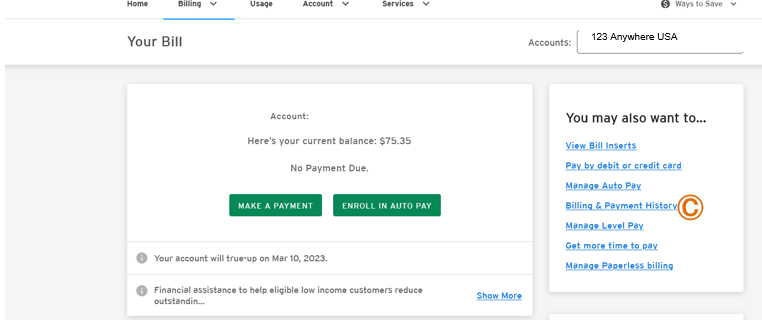
C. Click on the link for Billing & Payment History from the menu on the right side of the menu.
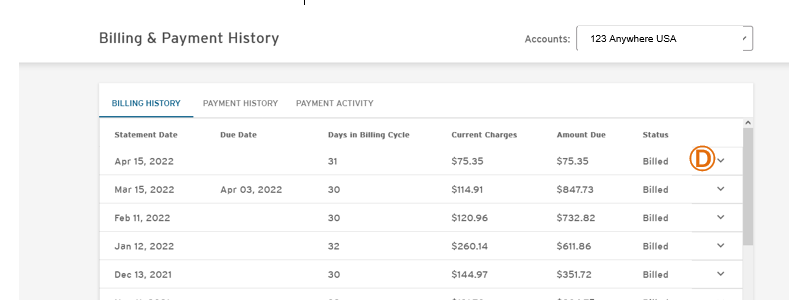
D. Click on the drop down menu arrow on the right side of the screen to display your bill.
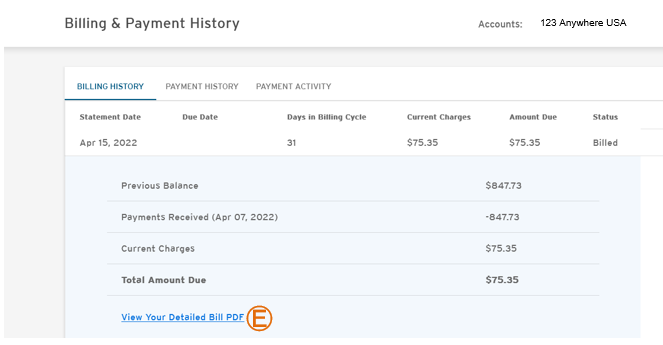
E. Click on the View Your Bill PDF link.
F. Click on the folder icon on your computer’s menu bar to download the file. Save the .pdf file to the folder of your choice.
G. Return to the Billing & Payment History Screen and repeat the download process detailed in steps D-F for as many of the most recent months of Bills available, up to twelve (12) months of Bills.
HOA managers often have an onerous time when preparing new budgets as costs to run the HOA increase but the Board doesn’t want to raise assessments. Investigating whether the HOA has energy zombies or phantom loads is a clever way to reduce energy costs and maintain the bottom line on the budget. It is also a great thing to do before starting a solar system capital improvement project.
What can an HOA do to reduce common area electric usage? HOA developments can vary widely in structure and amenities so we will cover a few general energy efficiency options that often apply to HOAs.
Are you ready to save money? Get a custom energy savings report fromMakello.
First on the list is to find the energy zombies and identify phantom loads by conducting an Energy Treasure Hunt. To conduct an Energy Treasure Hunt, teams of treasure hunters can walk the common area looking for ways to save energy. Materials and instructions are available at https://www.energystar.gov/buildings/save-energy-commercial-buildings/ways-save/treasure-hunts This can be a community building project for resident volunteers or you can hire Makello to perform the energy savings analysis for you. Where can the Treasure Hunters find the Energy Zombies and Phantom Loads?
Does the HOA have a pool? Are the pumps functioning properly? Pumps need proper maintenance and to be set at the right speeds to effectively filter pool water. Pumps not working correctly or efficiently can waste energy and run up electric bills. If it is time for a pool pump replacement, look for Energy Star Rated variable speed pumps. Another way to save energy for pool pumps, besides installing a solar system to run your pool pumps, is to install a timer and run your pumps only when the pool is in use. Most HOAs aren’t open 24/7 so it may be possible to stop the pumps when the pool is closed. Please check with your pool maintenance professional to ensure your pool is functioning properly and meets health and safety requirements.
Solar system with room for several picnic tables underneath. Installer:Green Energy EPC, Sales: Makello
Yes, we did just say you can install a solar system to run your pool pumps. Pool pumps are powered by electricity and are able to reliably run on solar power just like other electrical equipment. You can install solar to power your pool pumps even if you don’t have a pump room or community room with a large roof. Solar and pools are a 2 for 1 common area upgrade. Solar modules can be installed on a patio cover type structure and a covered seating or picnic area near the pool is created in the common area under the solar modules while the solar modules power your pool pumps. What a great capital improvement project for the HOA residents.
Let’s talk about lighting. Lights in HOA common areas are an essential part of safety and well designed lighting can enhance the quality of life and value of a property. Electric costs for common area lights may eat up an HOAs assessments. A lighting survey can help cut costs by analyzing the number and types of lights in use and evaluate the effectiveness of the lighting then implement energy saving measures.
There have been a number of improvements in lighting options that can help protect the bottom line in the HOA budget. LED bulb options are available for every fit, form and function, in a variety of fixtures, to replace less efficient bulbs. Switching to LEDs can reduce power consumption by up to 50% when replacing fluorescent lamps, and by up to 80% when replacing Incandescent/Halogen lamps. Lower total consumption and lower instantaneous peak use can trigger a change to a discount utility rate, and save even more money in avoided solar, battery, electrical and utility integration costs.
Solar outdoor light fixtures are available in a variety of styles. The fixtures are often a self contained unit with LED bulbs in a wide range of sizes and last for several years. Many fixture options include motion sensors which switch the light on and off as needed to preserve the battery charge and eliminate the need to fuss with timers.
Light bulbs aren’t the only lighting upgrade option. Sensors on light fixtures are capable of turning your lights on and off when the light is not needed. Motion sensors may be included on interior or exterior fixtures and light sensors may be utilized by outdoor fixtures. A sophisticated sensor is a geofence that is utilized with smart technology to detect when the perimeter has been crossed and triggering the appliance to perform the correct function. There is no need to spend money on electricity to light an area when the light is not needed.
Charlie Johnson and Sam Syed standing under pool side solar installation. Installer: Green Energy EPC Sales: Makello.
Water heating uses a lot of energy no matter what the size of the tank. Manufacturers have been implementing energy efficient technologies from the smallest system up to industrial size boilers. There are several technologies in use today including tankless systems, heat pump water heaters and solar water heating systems. Solar water heating systems are popular with pool owners for pool water heating and can be installed in conjunction with solar modules to run the pumps.
Not all energy efficiency measures involve technology. What you plant around your structure can make a difference on indoor comfort and energy use. Using plants to shade walls reduces heat build up inside your building and cuts cooling costs not to mention how a beautiful garden can improve the property value and quality of life.
Makello sells solar systems but why would we tell you how to save energy before selling you a solar system? Wouldn’t we want the system to be as large as possible? No. We believe the ethical thing to do is to help our customers reduce energy use before the solar system is designed and installed. We perform an energy efficiency analysis and use the data to help us design the best solar system for our customer, potentially saving our customer thousands of dollars. Please contact us if you would like for us to perform an energy analysis for your HOA.
Please visit our blog at Makello.com for more articles on energy efficiency, solar systems, and electric vehicles. If you are an HOA manager and would like some content for your HOAs newsletters please contact us a info@makello.com
Makello is an authorized distributor for Green Energy EPC CA Lic #978836
My economics professor used to say “There’s no such thing as a free lunch”. Incentives and rebates for energy upgrades may not eliminate all costs for kicking gas and energy wasting appliances, but they sure can help take a bite out of the total project cost.
1) Find out how Makello can help you. 2) Discuss your energy needs. 3) FREE Energy Savings Estimate.
Finding and navigating programs can be confusing and frustrating so we have developed a brief summary of programs and categorized tables of incentives as a handy reference guide.
SUMMARY OF INCENTIVE PROGRAMS
Inflation Reduction Act (IRA)
The recent passage of the Inflation Reduction Act of 2022 allocates billions of dollars in incentives to support clean-air technology solutions through a number of programs. Incentives qualified individuals may receive were capped at up to $14,000 Total Rebates (upfront), and up to $18,550 in Tax Credits per household.
A very popular provision of the Inflation Reduction Act is the increase of solar/ battery tax credit from 26% to 30% for 2022-2032. This tax credit had previously been scheduled to drop to 22% in 2023, and sunset in 2025.
Commercial properties aren’t excluded from the savings. Commercial properties are eligible for a Federal Solar Tax Credit of 30% or for accelerated depreciation or Section 179 tax credits, up to 100% Write-Off; a total of up to 50% subsidies on solar-battery.
HomeOwner Energy Savings (HOMES)
HomeOwner Energy Savings (HOMES) rebate program is a $4.3 billion program to establish rebates for various energy upgrades. The HOMES program provides rebates for energy retrofits based on the amount of energy savings. Rebates up to the lesser of $8,000 per home or 80% of the project cost for projects producing at least 35% in energy savings for income qualified households. Projects with energy savings between 10% to 35% receive a lower rebate amount. Multi-Family projects may participate in the program and have a specialized rebate structure under the HOMES program.
Rebates are subject to State implementation but the Federal Inflation Reduction Act of 2022 Legislation sets the maximum values. States may increase the maximum value of the rebates for low and moderate income households. It is important to note that the HOMES Program rebates cannot be combined with the High-Efficiency Electric Home Rebate Act (HEEHRA) Program.
High-Efficiency Electric Home Rebate Act (HEEHRA)
High-Efficiency Electric Home Rebate Act (HEEHRA) is a 10-year rebate program to support low- and moderate-income (LMI) households who choose to electrify their home.
The Inflation Reduction Act of 2022 provided $4.275 billion for grants to State Energy Offices and $224 million to Indian Tribes for the purpose of establishing home electrification rebate programs. A key element of this program is the program explicitly includes rebates for main panel upgrades and electric wiring.
The rebate caps are income based. Single family households earning less than 80% of the Area Median Income may be eligible to receive 100% of project cost or the maximum rebate amount, whichever is less. Single family households earning between 80% and 150% of area median income have rebate amounts capped at 50% of project cost or maximum rebate amount, whichever is less. Households earning more than 150% of area median income do not appear to be eligible for these rebates. The maximum dollar amount of rebates offered under the HEEHRA program is $14,00 to any single household. The rebates are slated to be distributed up front at the point of sale.
TECH Clean California
The TECH Clean California initiative is designed to help California achieve the state’s mission to reach carbon neutrality by 2045. The program focuses on aiding residents in single family and multi-family homes to adopt low emissions space and water heating technologies.
The initial budget for the program was $120 million. The program was wildly popular and the budget was exhausted unexpectedly quickly and is currently suspended in most areas including SDGE territory. The State Legislature recently funded an additional $145 million to the budget to expand the program. Currently, budgeting efforts are underway to assign each territory in California its allotment of the funds.
California Energy Smart Homes
California Energy Smart Homes has incentives for new construction of single family, duplex and townhomes multi-family low-rise, additions and ADUs, alterations of single family, duplex and townhomes multi-family low-rise, and ADUs with plans to offer incentives for manufactured housing. There are two pathways for incentives. One pathway is for owners wishing to kick gas by removing all natural gas from the home and convert to all electric. The second pathway is to have a mix of fuels in the home. NOTE: The mixed fuel pathway will close December 31, 2022.
Both pathways have a number of requirements in order to receive the incentives. Obtaining the handbook from California Energy Smart Homes https://www.caenergysmarthomes.com/ is recommended for detailed information and help you to find the pathway that is right for your project.
Comfortably California
The Comfortably California program was developed to support contractors, manufacturers and retailers for selling high-efficiency HVAC equipment . The program offers no-cost training to contractors and sales support. Participants in the educational programs can earn Continuing Education Units (CEUs).
Incentives are offered to the distributors for pass-through to the contractor. The programs allow contractors to develop marketing programs that offer customers a competitive price. Visit https://www.comfortablyca.com/ for more information.
Homeowners wishing to test induction cooking can borrow a portable induction cooktop for three (3) weeks through the San Diego Green Building Council Electric Home Cooktop Program. The program is free and to sign up to check out a cook top visit https://www.sd-gbc.org/electric_home_cooktop_program_launch
Makello’s Ethical Energy Savings Report is the result of a detailed trade-off study of discount utility rates, Community Choice Aggregation options, grants, rebates, tax credits, and equipment options, to determine the fastest payback and highest return on investment, to meet your home, business and vehicle energy needs.
TABLES OF INCENTIVES
Whole Home Energy Reduction
Click the “+” above, for Whole Home Energy Reduction incentives details
BASIC WEATHERIZATION
Click the “+” above, for Basic Weatherization incentives details
ELECTRICAL UPGRADES
LIGHTING UPGRADES
COOKING
Click the “+” above, for Induction Cooktop and Ultra-Efficient Oven incentives details
AIR CONDITIONING (Heating & Cooling)
Click the “+” above, for Heat Pump Air-Conditioning incentives details
THERMOSTATS & OCCUPANCY SENSOR
Click the “+” above, for Electrical Upgrades incentives details
HEAT PUMP WATER HEATING
Click the “+” above, for Heat Pump Water Heater incentives details
HEAT PUMP DRYER (Clothes)
Click the “+” above, for Heat Pump Dryer incentives details
PLUG-IN VEHICLES
PLUG-IN VEHICLE CHARGING
PLUG-IN VEHICLE MISCELLANEOUS
Click the “+” above, for Plug-In Vehicle incentives details
SOLAR PV
Click the “+” above, for Solar Power incentives details
ADVANCED ENERGY STORAGE
POOL HEATING, CHILLING AND PUMPING
Click the “+” above, for Pool incentives details
Makello can help you prepare to take advantage of upcoming savings through our detailed Ethical Energy Savings Report. The Ethical Energy Savings Report is the result of a detailed trade-off study of discount utility rates, grants, rebates, tax credits, and equipment options, to determine the fastest payback and highest return on investment to meet your home, business and vehicle energy needs.
The fee for the Ethical Energy Savings Report is refundable (less the 3rd-Party $15 utility data access charge) or credited towards our installation services, after you attend the presentation meeting and complete a 5 minute survey after permission to operate. Service includes up to 7.5 hours research, and 1 hour Q&A, by an Ethical Energy Efficiency Expert and Research Assistants. Visit Makello.com today to book your appointment.
Disclaimer: We are not tax professionals. This guide is not intended to be Tax or Legal Advice, does not guarantee eligibility for credits, rebates or refunds and is not meant to be relied upon for eligibility for any program, rebate, refund or tax credit. Please seek advice from a qualified tax professional to determine eligibility for any particular program or tax credit, refund or rebate.
We make every effort to verify program information however, program metrics can change. Please contact program administrators with questions regarding their program.
Disclaimer: We have done our best to verify all the information in the tables. Please contact info@makello.com to report errors within the tables.
Notes: 1 Rebate amounts for income qualifying households may be higher than stated amounts.
2 ETA: mid-to late 2023. Low-income households (those making below 80% of their area median income) are potentially eligible to have 100% of their costs covered. Moderate-income households are potentially eligible to get up to 50% of their costs covered. Eligibility requirement for rebate, up to 150% Area Median Income.
* The FY 2014 Consolidated Appropriations Act changed the definition of extremely low-income to be the greater of 30/50ths (60 percent) of the Section 8 very low-income limit or the poverty guideline as established by the Department of Health and Human Services (HHS), provided that this amount is not greater than the Section 8 50% very low-income limit. Consequently, the extremely low income limits may equal the very low (50%) income limits.
**Income estimates calculated by Makello are not official calculations and may not be the correct income level as determined by program administrators. We have made our best faith attempt to estimate the correct value based on information provided by HUD noted below.
Y 2022 Multifamily Tax Subsidy Projects Documentation System NOTE: Very low-income (50% Income Limits) calculations published by HUD are used as the basis for determining the full range of income limits for minimum set-aside tests. The following illustrates the calculation of additional limits:
80% limit: 160 percent or (80/50) of the income limit for a very low-income family of the same size. 70% limit: 140 percent or (70/50) of the income limit for a very low-income family of the same size. 60% limit: 120 percent or (60/50) of the income limit for a very low-income family of the same size. 50% limit: Equals the income limit for a very low-income family of the same size. 40% limit: 80 percent or (40/50) of the income limit for a very low-income family of the same size. 30% limit: 60 percent or (30/50) of the income limit for a very low-income family of the same size. 20% limit: 40 percent or (20/50) of the income limit for a very low-income family of the same size.
For each person over eight-persons, the four-person income limit should be multiplied by an additional 8 percent. (For example, the nine-person limit equals 140 percent [132 + 8] of the relevant four-person income limit.) HUD rounds income limits up to the nearest $50. Local agencies may round income limits for nine or more persons to the nearest $50, or they may use the un-rounded numbers.
3 Eligibility is based on the household’s gross income over the past 12 months. Household income cannot exceed 60% of the State Median Income Level
**Income estimates calculated by Makello are not official calculations and may not be the correct income level as determined by program administrators. We have made our best faith attempt to estimate the correct value based on information provided by HUD previously noted.
4 income less than or equal to 400% of the Federal Poverty Level
5 Income less than or equal to 225% of the Federal Poverty Level
6 **Income calculation based on 400% of the Federal Poverty Level (FPL) (2021). Income criteria is updated to the next calendar year FPL on April 15th annually.
7 Clean Air Vehicle Vehicle Decal Program
8 CARE updates after May 31, 2023. Upper limit calculation = 200% of Federal Poverty Level (FPL)
DAC SASH Homeowners must also meet income qualifications as denoted by annual CARE and FERA guidelines.
9 FERA updates after May 31, 2023 *Lower limit calculation = 200% of Federal Poverty Level (FPL) (CARE/ESA) +$1 **Upper limit calculation = 250% of Federal Poverty Guidelines
10 SOMAH Income Limits = 60% Area Median Income (AMI)
11 SASH, MASH and SGIP Income Limits
As of June 2020, the SASH program in SDG&E utility territory is fully reserved (based on incentive dollars) and closed to any new applications.
Map showing the service areas for Community Choice Aggregration Service Providers as of February 2022
Community Choice is coming to electric customers of San Diego County but what is Community Choice and what does it mean for you as a customer?
Community Choice Aggregation (CCA) is a locally run not-for-profit organization that was enabled by the California Legislature in 2002 AB117. The first CCA in San Diego County began operation in June 2018 and Community Choice Aggregation (CCA) continues to grow.
Community Choice Aggregation (CCA) does not generate electricity. Community Choice Aggregation (CCA) enables communities to pool ( i.e. aggregate) their electric load and purchase clean energy on the open market at competitive rates as well as develop local programs that benefit the community. The existing Investor-Owned Utility (IOU) continues to deliver power and maintain the grid.
The goals and benefits of Community Choice Aggregation (CCA) are:
Accountability, transparency, local control and consumer choice
Assist communities with reaching their climate and economic goals
Promote transition to a cleaner energy supply
Reinvest revenues in the community instead of distributing to shareholders
Allow communities to develop renewable energy projects
Act as a tool for establishing local energy resources and programs
Since Community Choice Aggregation (CCA) works with local Investor Owned Utilities (IOU), customers are billed through their local Investor Owned Utility (IOU). Utility Customers are automatically enrolled in the Community Choice Aggregation (CCA) per State Mandate but can opt out of the program by contacting your local CCA. Terms and conditions may apply to opting out of Community Choice Aggregation (CCA).
You still call your local Investor Owned Utility such as SDGE, SolCal Edison, or PG&E, if you have questions about your account or issues with your utility service such as downed power lines or power outages.
There are some programs offered through the Investor Owned Utilities (IOUs) that are impacted by the switch to Community Choice Aggregation (CCA).
For SDGE customers, the following programs are not offered to Community Choice Aggregation (CCA) participants:
EcoChoice
EcoShare
Reduce Your Use Rewards (ended for all SDGE customers on 2-31-2018)
Direct Access
SDGE customers enrolled in any of these programs who choose to stay enrolled in Community Choice Aggregation (CCA) will be removed from the above listed SDGE programs.
Makello’s Ethical Energy Savings Report is the result of a detailed trade-off study of discount utility rates, Community Choice Aggregation options, grants, rebates, tax credits, and equipment options, to determine the fastest payback and highest return on investment, to meet your home, business and vehicle energy needs.
SDGE customers receiving California Alternate Rates for Energy (CARE), Family Electric Rate Assistance Program (FERA), and Medical Baseline discount within their San Diego Gas & Electric (SDGE) energy delivery charges will continue to receive the discount after switching to Community Choice Aggregation (CCA).
SDGE Customers on Net Energy Metering (NEM) rates will still have Net Energy Metering (NEM) if offered through the Community Choice Aggregation (CCA) provider. If you are grandfathered on a NEM pricing, you will see no change in your grandfathered rates if NEM is offered through your CCA.
Please check with your local Investor Owner Utility to find out if your program enrollment or billing will be impacted by the switch to Community Choice Aggregation (CCA).
Service territory of the now defunct Solana Clean Energy Alliance active between June 2018- May 2021
The first CCA in San Diego County was the Solana Energy Alliance which began operation in June 2018 and merged with Clean Energy Alliance in May 2021.
The Clean Energy Alliance CCA is currently servicing Solana Beach, Carlsbad, San Marcos, Escondido, and Del Mar. Service began in May 2021 for customers in Solana Beach, Carlsbad, and Del Mar. Service roll out began in December 2021 for Escondido and San Marcos. Please visit the Clean energy Alliance for more information regarding rates and other information for this CCA. https://thecleanenergyalliance.org/ The Clean Energy Alliance currently has all the information in pdf documents and does not have an online comparison tool.
Map showing the Clean Energy Alliance service territory as of February 2022
The Clean Energy Alliance offers rates based on 50% clean energy production, 75% clean energy production or 100% clean energy production as well as Net Energy Metering (NEM) for customers with renewable energy production systems.
The Net Energy Metering (NEM) program from Clean Energy Alliance is similar to the current program offered by SDGE. The energy usage and excess production are tracked and at the end of the 12 month relevant period, the account is trued up. If there is a net charge due, the customer will be billed. If the customer had a net excess generation, they are eligible to receive Net Surplus Compensation which is set as of February 2022 at $0.06 per kilowatt-hour for Net Excess Generation.
SDGE customers enrolled in Net Energy Metering (NEM) will automatically be enrolled in the Clean Energy Alliance Net Energy Metering (NEM) Rate. Customers who install a solar, wind or other self-generation system after switching to services provided by Clean Energy Alliance can sign up for Net Energy Metering (NEM) with SDGE and be automatically enrolled in the Clean Energy Alliance Personal Impact Net Energy Metering (NEM) rate.
Map showing San Diego Community Power service territory.
The largest CCA in San Diego County is San Diego Community Power. This organization covers the majority of the County. The organization is initially offering two rates tiers, PowerOn and Power100 as well as Net Energy Metering (NEM).
The City of Encinitas has opted for automatic enrollment of residents in Power100 rate and Imperial Beach, La Mesa, Chula Vista, and San Diego will be enrolled in the standard PowerOn rate. The Net Energy Metering (NEM) program is similar to the current SDGE program except San Diego Community Power bills monthly instead of issuing a potentially large bill at the annual true up. If you prefer to true up annually, you may contact San Diego Community Power and sign up for that option.
San Diego Community Power has an incentive for customers that have energy generation systems producing an excess of electricity as measured in annual net kilowatt-hours at the end of their 12 month relevant period. Those customers will be compensated at the Net Surplus Compensation rate which is based on SDGE’s True Up Monthly rate plus a $0.0075/kWh adder. More information on SDGEs excess generation compensation may be found here https://www.sdge.com/residential/savings-center/solar-power-renewable-energy/net-energy-metering/billing-information/excess-generation
San Diego Community Power has a tool to help customers in their service territory estimate their bill with the different rates. The button for the Bill Comparison Calculator for residential and commercial rates is located at the bottom of the page. Please click this link to access the tool. https://sdcommunitypower.org/your-choice/compare-service-plans/
Since the service territory is so large with such a large number of customers, San Diego Community Power service has been rolled out in steps. The dates are as listed in the chart below.
San Diego Community Power Service TerritoryEligibility Dates
Location
Residential Eligibility Date
Commercial Eligibility Date
Municipal Eligibility Date
Unincorporated Areas of San Diego County
2023
2023
2023
City of San Diego
May 2022
June 2021
May 2021
Chula Vista
May 2022
June 2021
May 2021
Encinitas
April 2022
June 2021
May 2021
Imperial Beach
February 2022
June 2021
May 2021
La Mesa
March 2022
June 2021
May 2021
National City
2023
2023
2023
For those who prefer a picture, here is a map showing the Cities with residential roll out in 2022 for San Diego Community Power and the dates noted in the legend.
San Diego Community Power Service Territory with Eligibility Dates for residential customers enrolling in 2022
Here is a map showing the communities that are scheduled to be eligible for service from San Diego Community Power some time in 2023. Stay tuned for more information on service roll out as it becomes available.
Map showing San Diego Community Power service territory for customers with a 2023 enrollment date.
Makello is an authorized distributor for Green Energy EPC CA Lic #978836
You’ve received an architectural application for a rooftop solar installation so what do you do next? Aesthetics are often the focus of solar installations in HOAs, but there are technical issues to be taken under consideration when the board of directors or architectural committee evaluates an application for a solar installation. Is the board or architectural committee prepared for the task?
First and foremost, governing documents pertaining to solar installations need to be reviewed by the board of directors together with the association’s attorney to ensure the governing documents are up to date. The solar industry is a rapidly changing industry with new advancements in solar technology being made regularly. Keeping the governing documents concurrent with Civil Code and solar technology developments can provide HOA management, board and architectural committee members with a solid foundation with which to evaluate solar applications and navigate the review process.
HOAs with shared roofs such as town homes, multi-story buildings or carports may also wish to work with the HOA attorney to develop guidelines regarding which roofs solar modules are allowed to be installed and how the shared roof space will be allocated. Including a solar installation expert in the rules development process in order to help your association determine which portion of the roof is suitable for solar installations is a prudent decision. Required setbacks, obstructions, shading, roof shape, tilt and which direction the roof faces all impact the solar potential of a roof. Due to site factors and code requirements, some roofs may have little or no solar potential while other roofs may have amazing solar potential. It would be beneficial for the association to determine how to handle these issues ahead of time and address how to equitably divide up the roof space to avoid unnecessary conflict. Creating a map to document the usable roof space with good solar potential and allocation of that space would aid interpretation of the HOA guidelines.
Makello works with non profits and HOAs to create maps that meet organizational needs.
Education for HOA managers, board and architectural committee members is also a good idea. It isn’t necessary to take a course in photovoltaics suited to solar industry professionals. There are free or low cost introductory courses that provide information on the basics of solar to help the non-professional or consumer understand the fundamentals of solar systems with minimal time commitment. Understanding the jargon and electrical concepts can help managers, HOA board, and architectural committee members feel more comfortable when reviewing an owner’s architectural submission for a solar installation. Being comfortable with the requirements and having a basic understanding of solar principles helps the association avoid missteps and misunderstandings.
The SDGE Energy Innovation Center has free or low cost courses, https://www.sdge.com/energy-innovation-center. Solar Energy International, https://www.solarenergy.org/, is another resource for online introductory courses in solar energy. A third resource for solar education is Heatspring, https://www.heatspring.com. A final resource in North American Board of Certified Energy Professionals, https://www.nabcep.org, or NABCEP for short. NABCEP is mostly geared to professionals but they do periodically offer free introductory webinars or training for the non-professional or consumer.
An empowered HOA Board or Committee Member discussing solar energy.
There are a few things homeowners in HOAs can do to make the approval process for solar installations be less stressful.
Number one is to make sure you have the current version of all HOA governing documents that include the rules regarding installing solar i.e. the Rules & Regs. Architectural Guidelines and application and/or CC&Rs. Be ready to provide the rules to your solar installer because the installer needs to be aware of HOA specific issues pertaining to the installation that may impact system design.
Find out whether or not your contractor needs to indemnify the association and how much insurance the contractor needs to carry. Confirm your contractor meets the requirements. Not all contractors are willing to indemnify the association or wish to insure for the amount the association requires.
Make sure you understand who is going to be responsible for maintenance and repair of the roof under the solar installation as well as maintaining insurance for the solar installation on common area roofs. This may impact your decision to proceed with the solar installation. It is also a good idea to find out if the association is going to be conducting roof repairs in the near future that may impact your solar installation. You may be responsible for covering the cost of removing and re-installation of your solar system so the association can conduct roof repairs.
Give yourself time to obtain and evaluate bids, fill out HOA forms and gather supporting documents. Find out what the submission procedures and deadlines are for your architectural application. Solar installations are complex and not likely to be successfully submitted in a day or two.
Together Everyone Achieves More
Additionally, don’t forget to check the insurance and licensing of the installer on the California State Contractors License Board https://www.cslb.ca.gov.
Beauty is in the eye of the beholder and HOA owners can be divided in their opinion on the aesthetics of solar installations. Being prepared with knowledge about solar and having the correct procedures in place can help minimize issues and take the stress out of architectural applications for solar system installation.
Makello is an authorized distributor for Green Energy EPC CA Lic #978836
$1,000 to Reserve Solar Battery & SGIP Rebate Preparation by Makello (Don’t wait until the SGIP Rebate is gone!)
*Makello, as an authorized distributor for Green Energy EPC (CA Lic 978836), cannot guarantee SGIP acceptance, funds availability, and rebate amount. Only the SGIP program administrator, can approve the Rebate Reservation Form application. When the SGIP program administrator accepts our application on your behalf, once approved, you’ll have up to 12 months to decide when to install, or request an extension.
A $1,000 refundable fee reserves your Solar Battery and SGIP Rebate Preparation, which includes the required site survey, Energy Analysis and purchase contract to sign, prior to the SGIP Rebate Reservation Form (RRF) submission.
This new eligibility criteria augments the original pathways to eligibility for SGIP rebates. You may qualify for a SGIP rebate even if you live outside a high fire-threat district as defined by the CPUC because the electric grid infrastructure boundaries do not match the high fire threat district boundaries. You may experience PSPS or de-energization events due to the wildfire because the fire perimeter disrupts your electric service or your electric service is on a circuit that is partially inside an area at risk for wildfire even though your home is not located in the at-risk zone.
Please note, the CPUC high fire threat district boundaries are different from the CalFIRE high fire threat zones. You cannot use the CalFIRE high fire threat zones to determine SGIP eligibility.
Makello is able to help you prepare for electric service disruption with solar and battery storage. We start with a thorough energy usage analysis, sit down and talk to you about your energy usage and goals, design a custom system to meet your needs, complete and submit SGIP rebate apps for you. We strive to make it easier for you.
If you are worried about your electric service being disrupted because of your medical condition or need electric equipment to treat your medical condition, please contact SDGE and notify them of your needs. SDGE is also able to help you determine your eligibility for special electric rates. Additionally, installing a solar system with battery storage may also benefit you. Please contact Makello and we will work with you to determine if solar or battery storage is right for you. You may also qualify for rebates on your installation.
If you want to know if you have qualifying PSPS events or de-energization events due to an actual wildfire, please check with SDGE or your local utility provider to find out the number of PSPS events or wildfire caused de-energization or power outage events your electric circuit has experienced. Then contact Makello to get started on your solar electric or battery storage project.
Your Board just had their monthly meeting and now they expect you to be a solar expert and electrical engineer. Just how many hats can a HOA manager wear? You only need to wear one hat when you have the right solar contractor in your contacts, Makello.
Makello is a San Diego company with years of experience in the energy efficiency and solar industry. Makello employees are certified by the North American Board of Certified Energy Practitioners. (NABCEP ) for short. We believe everyone, including homeowners associations, can make energy efficiency upgrades and meet their sustainability goals.
Makello’s approach is to investigate ways to improve energy efficiency before designing the solar system. This saves the HOA money. We could do what some companies do and just create a design with as many solar modules as possible on the common area roof but we feel that just isn’t right. It doesn’t result in the best design for the customer and creating the best design is of the utmost importance to us. We want to help you help your Board install solar in the HOA common area. Contact us today to schedule an energy analysis or discuss a solar project for your HOA clients.
Green Energy EPC President Sam Syed in front of a HOA capital improvement solar project.
Also, please visit our blog at Makello.com for more articles on energy efficiency, solar systems, and electric vehicles. If you are an HOA manager and would like some content for your HOAs newsletters please contact us a info@makello.com
“Why Makello?” video
“Solar Panels” video
Makello is an authorized distributor for Green Energy EPC by Makello, Inc. (CA C-10: #1110498)
Makello and Green Energy EPC’s current customer referral leader has 15 referrals.
Referral bonuses can reduce the time to pay back by several years!
Just about everyone knows someone that is considering energy upgrades, appliance changes or plug-in vehicles, to save money on energy bills, be prepared for emergencies, and reduce their GHG emissions.
Other solar companies, especially leasing companies, offer bigger referral fees by raising prices, or by cutting corners on the balance of the system and going super fast on the installation, which can cause serious waterproofing and electrical problems later.
We are different. Makello provides an Ethical Energy Savings Report and proposes ways to use no-cost and low-cost alternative behavior change and energy efficiency, to reduce the size of the solar and battery system, and avoid electric panel upgrades, saving $1,000’s per installation. Green Energy EPC only uses the highest quality materials and workmanship, so you can trust we take the time to do the job right.
2X your $$$ in ’22!
From now through April 30th, 2022, when you recommend Makello to your trusted contact AND you Follow/Like/Share/Comment on our Social Media channels, we will double your referral payment so that you will get 2X the regular referral bonus after the Green Energy EPC installation is completed.
$400 x 2 = $800 for Commercial Solar Panel or Energy Storage.
$200 x 2 = $400 for Residential Solar Panel or Energy Storage.
$50 x 2 = $100 for Ultra-Efficient Appliance(s) or EV Charging.
Makello and Green Energy EPC’s referral offer, from now through April, is available due to a match from a generous supporter of clean-air technologies, quality workmanship, and equity.
So with Makello.com and Green Energy EPC, you can feel safe and comfortable recommending your friends, neighbors, and coworkers to speak with us about Solar Power, Plug-In Vehicles, Advanced Energy Storage, and Ultra-Efficient Appliances.
For twice the bonus, refer and friend AND
Follow/Like/Share/Comment on any of our Social Media channels below
Makello is an authorized distributor for Green Energy EPC by Makello, Inc. (CA C-10: #1110498)
50 Gal Rheem Professional Prestige ProTerra Hybrid Electric Water Heater PROUH50-T2-RU375-15 (15A) OR PROUH50-T2-RU375-30 (30A).
On December 31, 2021*, or as soon as the SDG&E Rebate program funds are exhausted, the $500 Rebate for 50 gallon Heat Pump Water Heaters expires. Makello has a wholesale supplier with access to reserve your Heat Pump Water Heater and claim your instant rebate. Your Heat Pump Water Heater will be shipped to you in as soon as 1-2 months and may be eligible for a $300 Federal Tax Credit.
$2,000 to reserve before December 31, 2021 at 12PM. (Don’t wait until the last minute! Most suppliers are sold out until 2022!)
*Makello, as an authorized distributor for Green Energy EPC (CA Lic #978836), cannot guarantee SDGE Rebate acceptance, funds availability, and rebate amount. Only the authorized SDGE Rebate Program Administrator can approve the application; program restrictions apply. We are not tax experts.
Makello Helps You Save Even More, With Energy Efficient Appliances
Makello can help you: 1 – Replace inefficient appliances to reduce the size and cost of a solar and battery system. 2 – Qualify for rebates, incentives, discount utility rates and a new larger baseline allowance. 3 – Determine if electric panel and site qualifies for energy upgrades. 4 – Make the emergency backup power last longer. 5 – Increase the value of the property and improve the quality of life.
*Prior blog posting reported that the SDGE Rebate ended on September 30, 2021, as quoted from SDG&E flyer where there was “an error” in the March 8 version downloaded from SDG&E website.
NeoVolta’s AC and DC coupled solutions work with existing residential solar systems. NeoVolta (San Diego, CA) has lithium iron phosphate (LiFePO4) chemistry ‘safer by design’. https://www.pv-magazine.com/2021/09/23/residential-battery-inverter-from-the-united-states
New Self-Generation Incentive Program (SGIP) Rebate application for Step 7 – Small Residential Energy Storage funding, becomes available starting Monday, Sept 27, 2021, at a rebate value of $0.15/wH.
Caller: “Quick question. I already have solar, so which Battery is right for me? I need an answer ASAP, because SGIP Rebates are back and who knows for how long.” Response: “If you already have a solar, then NeoVolta battery can work with just about any existing system, and is lowest cost to integrate as an AC Coupled solution, for up to 9.2kW solar. There are exceptions to the rule, if the existing solar is landing on a Renewable Meter Adapter (RMA), but we have custom solutions in that case. And, the NeoVolta battery can be DC coupled to solar as well, up to 8.448kW DC, using Tigo TS4-A-O Power Optimizers.
Californian’s reaped over $1B in SGIP Rebates. Don’t miss out! It is possible to qualify for up to 100% incentives for your solar battery in the Equity Resiliency $1/wH category and up to 85% in the Equity $0.85/wH category.
$1,000 to Reserve Solar Battery & SGIP Rebate Preparation by Makello (Don’t wait until the SGIP Rebate is gone!)
*Makello, as an authorized distributor for Green Energy EPC (CA Lic 978836), cannot guarantee SGIP acceptance, funds availability, and rebate amount. Only the Center for Sustainable Energy (CSE), the SGIP program administrator, can approve the Rebate Reservation Form application. When the CSE accepts our application on your behalf, you’ll be approved – and you’ll have up to 12 months to decide when to install, or request an extension..
A $1,000 refundable fee reserves your Solar Battery and SGIP Rebate Preparation, which includes the required site survey, Energy Analysis and purchase contract to sign, prior to the SGIP Rebate Reservation Form (RRF) submission. (The refundable fee terms are in the “Addendum-to-the-Green-Energy-EPC-contract-1” reference section below.)
Enphase’s AC Coupled solutions are eligible for SGIP Rebates. The Encharge’s lithium iron phosphate (LiFePO4) chemistry is safer by design and is 2021 EES Award Winner! https://enphase.com/blog/encharger-battery-wins-2021-ees-award
The SGIP Program may become wait-listed, it may be funded again, and it may run out of funds at any time, so it is critical to proceed quickly to process your SGIP Rebate.*
Makello Helps You Save Even More, With Energy Storage Solutions
Makello will help you: 1 – Qualify for rebates, incentives and discount utility rates. 2 – Suggest Energy Efficiency measures, to right-size of the solar and battery system. 3 – Determine if an existing electric panel can qualify for solar and battery. 4 – Provide an Ethical Energy Savings Report. 5 – Provide a purchase and installation contract for a solar and battery system to meet your goals and the site conditions.
LG Chem’s DC Coupled solutions are eligible for SGIP Rebates. LG Chem is one of the world’s top battery suppliers since 2016, with RESU Lithium-Ion batteries.
Makello offers NeoVolta, Enphase and LG Chem Advanced Energy Storage for residential solar and battery installations in our SDG&E territory for 2021 Reservations. (We are experienced with Outback and Sonnen battery systems as well.)
Reference:
Green Energy EPC and State of California Required Documents:
Enphase Documents: (For an existing Enphase microinverter solar panel system; M215, M250, S280, IQ7X, IQ8X). Note: S280 must be replaced with IQ8X inverters at extra cost $250/solar module installed. Note: M215 and M250 existing Enphase microinverters adds $900 to Gross Cost.
Did you know that, whether or not you have an existing solar energy system, you can tap into a combination of up-front incentives, financing, to build up your savings into a 6-Month Emergency Fund and lower monthly costs?
Once-considered luxury items, such as Solar Power, Plug-In Vehicles, and Energy Storage, now payback quickly for cash purchases and are within reach for most homeowners, due to up-front incentives and lower total monthly costs from loan or Property Assessed Clean Energy financing.
Makello can provide you with a FREE Energy Savings Estimate! If you share your utility data with us we can create a solar energy system that is specific to your needs. We will NOT share your data.
Our model can also show the cost saving benefits of a Plug-In Vehicle or Energy Storage system, or both, in addition to your solar system. All of our team works to get you the most comprehensive, thorough Energy Analysis in the San Diego area as quickly as possible.
The software engineers are constantly updating our computer model to reflect the most current utility rates and product costs. We have a dedicated GIS analyst who can qualify you for as many rebates and incentives possible. Our Energy Efficiency experts can also provide other solutions to reduce energy costs such as appliance changes or switching utility rates. Press one of the buttons to see how much you can save!
Pandemic stressing out the family finances? Turn your home and vehicle into a clean energy emergency fund!
Getting laid-off is stressful even in the best of times. In the midst of a pandemic, job loss and financial surprises can drain your savings account fast. Did you know that whether or not you have an existing solar energy system, you can tap into a combination of upgrade incentives and financing that can return money to you. A Solar, Plug-In Vehicle and Energy Storage lifeline!
Recently, a solar-powered homeowner asked Makello to quote adding a Level 2 electric car charger for their Nissan Leaf, an installation often priced at $500 or less. Most solar companies refuse to take these small jobs as they are unprofitable for the installer.
But at Makello, we look at things differently. We know from experience that with the dizzying array of Solar Power, Plug-In vehicle, and Energy Storage incentives and energy cost savings, energy upgrades can pay for themselves. When the homeowner shared that their rooftop solar was installed for free under a low-income residential solar program (SASH), and that they had been laid off due to the pandemic, we started crunching numbers to see what we could do.
We offered a plan to improve the homeowner’s cash flow and create a 6-month emergency reserve fund out of available incentives.
As you can see in the savings over time graph, the system is cash flow positive every year, meaning lower annual cost, through the term of the PACE financing, and then savings accelerates.
Incentive Finder – Makello’s own GIS mapping database uses the home’s geographic location to determine eligibility for a wide variety of energy upgrade grants, rebates, discounts and tax credits.
Optimize Upgrade – Makello’s own Energy Analysis software shows the optimal Solar, EV, and Energy Storage upgrade plan, for the eligible incentives. In California, benefits such as emergency backup power for home and vehicles, water pumps, air-conditioning, air-purifying and fire-fighting equipment can all be worked into the upgrade plan. In this case, Makello showed that a larger upgrade would tap into $23,448 in incentives, and give the homeowner more solar, energy storage, a second EV and Level 2 charger.
PACE program financing – The State of California offers a Property Assessed Clean Energy (PACE) financing plan. Homeowners can qualify based on a recent tax return or pay stubs. The financing does not appear on a credit report, is not considered a loan, does not trigger a property reassessment, and can transfer to the next home buyer.
Create a 6-month financial ‘lifeline’ – Makello’s “Lifeline” incentive payment program tracks the incentives and requirements, and allows the homeowner to choose the best time to draw on their earned incentives. In the example used here, a homeowner can decide after receiving the up front incentives to purchase a new or used Plug-In Vehicle, further reducing their monthly costs, or pay their most urgent bills, such as mortgage, food, and medical.
Makello’s GIS mapping database, uses county parcel location to help homeowners determine eligibility for a wide variety of solar programs. We also use mapping to help non-profit organizations to design programs in disadvantaged communities that promote solar energy and electric vehicle incentives for economic and environmental benefit.
Makello works with non profits and other agencies to create maps for Environmental Justice initiatives.
How the PACE Program works:
The PACE program is intended for those that can demonstrate the ability to pay. Homeowners provide a recent tax return or a pay stubs for income verification, and credit check, and Makello provides the Energy Analysis to show that the energy efficiency project will be cash flow positive.
Book a FREE 15 minute appointment to: 1) Find out how Makello can help you. 2) Discuss your energy needs. 3) Get a FREE Energy Savings Estimate.
PACE financing ranges from 5 to 30 years term for solar, 10 years for Energy Storage, and can be used for other energy efficiency improvements, such as electric panel upgrade, EV Charging, and a long list of energy efficiency upgrades. PACE can be as low as $0 down. It provides tax deductible interest.
For our homeowner in this example, Simple Payback is possible in 3.7 years through Annual Energy Cost Savings. That means it’s a good deal for a cash purchase or loan. For those on a fixed income, traditional loans might not be a viable option. In the cases where PACE financing is Cash Flow Positive, we can present the PACE option as an alternative to traditional loans and leases.
Makello provides full disclosure about PACE terms and program information, as well as programs offered through banks and credit unions. Please contact us and we’ll be happy to discuss the alternatives.
Recently, a solar powered homeowner inquired about adding a Level 2 charger for a 2013 Nissan Leaf, typically a $400 installation. Most solar companies would refuse the job due to low profit.
In Case of Emergency, An “Energy Upgrades Lifeline” Pays For Itself.
Makello rose to the challenge and used our Energy Analysis tool to present an “Energy Upgrades Lifeline” option that improves the homeowner’s cash flow and can provides a “6 Month Emergency Fund”.
Parcel level GIS mapping software made by Makello, is used to determine eligibility qualifications for a wide variety of energy upgrade grants, rebates, discounts, credits and deductions.
Makello works with non profits and other agencies to create maps for Environmental Justice initiatives.
The rooftop solar on the home was installed for free in 2012 by Grid Alternatives through the SASH program, for qualified low-income residential California homes. An Energy Upgrade Lifeline can work even if the property already has solar.
One of the homeowners was temporarily laid off due to the pandemic. An Energy Upgrade Lifeline can qualify for financing by the State of California based on prior year tax return.
Makello’s Ethical Energy & Cost Savings Analysis provides $23,448 Incentives upfront for adding more solar, energy storage, a 2nd EV and a Level 2 charger.
What makes the solution possible is a Property Assessed Clean Energy (PACE) financing method that does not appear on the credit report, is not a loan, does not trigger a property reassessment and can transfer to the next home buyer.
PACE financing ranges from 5 to 30 years term for solar, 10 years for energy storage, and can be used for other energy efficiency improvements. PACE can be as low as $0 down, it provides tax deductible interest, there are no pre-payment fees, and no credit minimum.
The PACE program is intended for use by those that can demonstrate the ability to pay. There are safeguards to protect against abuse, such as a soft pull credit check, income verification from a recent paycheck or tax return, and a requirement that the energy efficiency project is cash flow positive, as it is here:
Click to Enlarge
What makes the solution a “Lifeline” is that the incentives payments can be used as a reserve. In an emergency, the basic expenses such as mortgage payment, food, and medicine are met. The system is designed to be cash flow positive, meaning lower cost monthly and annually, than the baseline status quo.
Makello’s “Lifeline” Incentive Payment timing gives the homeowner flexibility to make decisions on what to do with the money and when to put the reserve to use. In this case, after 6 months, the homeowner can decide to use some or all of the Incentives to purchase a Plug-In Vehicle to further increase energy cost savings, or for another important use.
Simple Payback is possible in 3.7 years through Annual Energy Cost Savings. That means it’s a good deal for a cash purchase or loan. For those on a fixed income, traditional loans might not be a viable option. In the cases where PACE financing is Cash Flow Positive, we can present the PACE option as an alternative.
(Click to enlarge) As you can see in the savings over time graph, the system is cash flow positive every year through the 10 year PACE financing and then savings accelerates.
Book a FREE 15 minute appointment to: 1) Find out how Makello can help you. 2) Discuss your energy needs. 3) Get a FREE Energy Savings Estimate.
Makello’s Optimal Cost Savings Plan has other benefits for California in 2020, such as emergency backup power for home and vehicles, water pumps, air-conditioning, air-purifying and fire-fighting equipment.
Makello is ethical in our approach, offering full disclosure about PACE terms and program information, bank and credit union loan alternatives.