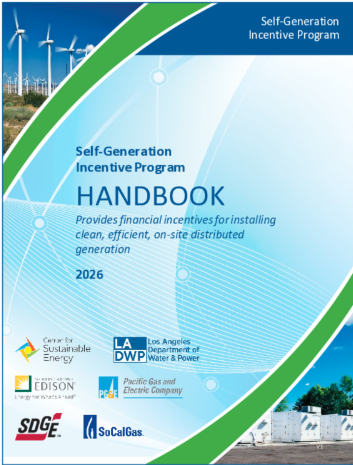
However, CPUC Decision 25-12-003 impacts the SGIP Rebate Program significatnly on December 31, 2025. SGIP ratepayer incentive budgets are closing for new ratepayer application submissions including applications being submitted for the waitlist in the following budget categories:
Large-Scale Storage
Small Residential Storage
Residential Solar and Storage Equity – Ratepayer
Non-Residential Storage Equity
Equity Resiliency
Generation
December 20, 2025 is the last day to press the “submit” button for the incentive budgets listed above.
Ratepayer funding allocations discontinues after 2025. Applications in a “Waitlist” status on December 31, 2025 face cancellation.
Please reach out to SCE, CSE, PG&E, or SoCalGas if you have any questions regarding the changes to the SGIP Program. You may find program administrator contact information at https://www.selfgenca.com/home/contact/
You’ve received an architectural application for a rooftop solar installation so what do you do next? Aesthetics are often the focus of solar installations in HOAs, but there are technical issues to be taken under consideration when the board of directors or architectural committee evaluates an application for a solar installation. Is the board or architectural committee prepared for the task?
First and foremost, governing documents pertaining to solar installations need to be reviewed by the board of directors together with the association’s attorney to ensure the governing documents are up to date. The solar industry is a rapidly changing industry with new advancements in solar technology being made regularly. Keeping the governing documents concurrent with Civil Code and solar technology developments can provide HOA management, board and architectural committee members with a solid foundation with which to evaluate solar applications and navigate the review process.
HOAs with shared roofs such as town homes, multi-story buildings or carports may also wish to work with the HOA attorney to develop guidelines regarding which roofs solar modules are allowed to be installed and how the shared roof space will be allocated. Including a solar installation expert in the rules development process in order to help your association determine which portion of the roof is suitable for solar installations is a prudent decision. Required setbacks, obstructions, shading, roof shape, tilt and which direction the roof faces all impact the solar potential of a roof. Due to site factors and code requirements, some roofs may have little or no solar potential while other roofs may have amazing solar potential. It would be beneficial for the association to determine how to handle these issues ahead of time and address how to equitably divide up the roof space to avoid unnecessary conflict. Creating a map to document the usable roof space with good solar potential and allocation of that space would aid interpretation of the HOA guidelines.
Makello works with non profits and HOAs to create maps that meet organizational needs.
Education for HOA managers, board and architectural committee members is also a good idea. It isn’t necessary to take a course in photovoltaics suited to solar industry professionals. There are free or low cost introductory courses that provide information on the basics of solar to help the non-professional or consumer understand the fundamentals of solar systems with minimal time commitment. Understanding the jargon and electrical concepts can help managers, HOA board, and architectural committee members feel more comfortable when reviewing an owner’s architectural submission for a solar installation. Being comfortable with the requirements and having a basic understanding of solar principles helps the association avoid missteps and misunderstandings.
The SDGE Energy Innovation Center has free or low cost courses, https://www.sdge.com/energy-innovation-center. Solar Energy International, https://www.solarenergy.org/, is another resource for online introductory courses in solar energy. A third resource for solar education is Heatspring, https://www.heatspring.com. A final resource in North American Board of Certified Energy Professionals, https://www.nabcep.org, or NABCEP for short. NABCEP is mostly geared to professionals but they do periodically offer free introductory webinars or training for the non-professional or consumer.
An empowered HOA Board or Committee Member discussing solar energy.
There are a few things homeowners in HOAs can do to make the approval process for solar installations be less stressful.
Number one is to make sure you have the current version of all HOA governing documents that include the rules regarding installing solar i.e. the Rules & Regs. Architectural Guidelines and application and/or CC&Rs. Be ready to provide the rules to your solar installer because the installer needs to be aware of HOA specific issues pertaining to the installation that may impact system design.
Find out whether or not your contractor needs to indemnify the association and how much insurance the contractor needs to carry. Confirm your contractor meets the requirements. Not all contractors are willing to indemnify the association or wish to insure for the amount the association requires.
Make sure you understand who is going to be responsible for maintenance and repair of the roof under the solar installation as well as maintaining insurance for the solar installation on common area roofs. This may impact your decision to proceed with the solar installation. It is also a good idea to find out if the association is going to be conducting roof repairs in the near future that may impact your solar installation. You may be responsible for covering the cost of removing and re-installation of your solar system so the association can conduct roof repairs.
Give yourself time to obtain and evaluate bids, fill out HOA forms and gather supporting documents. Find out what the submission procedures and deadlines are for your architectural application. Solar installations are complex and not likely to be successfully submitted in a day or two.
Together Everyone Achieves More
Additionally, don’t forget to check the insurance and licensing of the installer on the California State Contractors License Board https://www.cslb.ca.gov.
Beauty is in the eye of the beholder and HOA owners can be divided in their opinion on the aesthetics of solar installations. Being prepared with knowledge about solar and having the correct procedures in place can help minimize issues and take the stress out of architectural applications for solar system installation.
Makello is an authorized distributor for Green Energy EPC CA Lic #978836
Your Board just had their monthly meeting and now they expect you to be a solar expert and electrical engineer. Just how many hats can a HOA manager wear? You only need to wear one hat when you have the right solar contractor in your contacts, Makello.
Makello is a San Diego company with years of experience in the energy efficiency and solar industry. Makello employees are certified by the North American Board of Certified Energy Practitioners. (NABCEP ) for short. We believe everyone, including homeowners associations, can make energy efficiency upgrades and meet their sustainability goals.
Makello’s approach is to investigate ways to improve energy efficiency before designing the solar system. This saves the HOA money. We could do what some companies do and just create a design with as many solar modules as possible on the common area roof but we feel that just isn’t right. It doesn’t result in the best design for the customer and creating the best design is of the utmost importance to us. We want to help you help your Board install solar in the HOA common area. Contact us today to schedule an energy analysis or discuss a solar project for your HOA clients.
Green Energy EPC President Sam Syed in front of a HOA capital improvement solar project.
Also, please visit our blog at Makello.com for more articles on energy efficiency, solar systems, and electric vehicles. If you are an HOA manager and would like some content for your HOAs newsletters please contact us a info@makello.com
“Why Makello?” video
“Solar Panels” video
Makello is an authorized distributor for Green Energy EPC by Makello, Inc. (CA C-10: #1110498)
Homeowners or tenants in HOAs, apartment dwellers and condo owners are often discouraged from energy upgrades like solar panels, Plug-In Vehicle charging, LED lighting and energy storage. With a little research, anyone can take steps towards energy independence.
California’s “Solar Rights Act” defends your right to produce power in California. The HOA may restrict, deny or challenge solar installations, but there is a path to follow to win:
1. Find a neighbor that installed solar power or filed an application with the HOA to install solar power, and ask them about their experience. (If there are no previous applications, it may be helpful to find a neighbor that installed EV charging, solar water heating, energy storage and/or LED lighting.)
2. Request and review the HOA rules and regulations regarding solar power systems.
>Are there any covenants that apply to solar photovoltaic energy systems?
>>If there is a restrictive covenant, is it specific (mentions solar energy systems) or generic?
>Is an Architectural Review Committee involved?
>>Do they have a specific set of criteria to evaluate solar energy systems?
>Is the HOA a public entity?
3. Request HOA permission to install, in writing, by submitting the solar electrical design permit application package to the HOA and wait for response 45 days.
4.
Once approved, carefully read any agreements that the HOA requires as a
condition of permission to install. (i.e., “Maintenance/Indemnity
Agreement”).
Are you ready to save money on solar power, EV charging or Energy Storage? Get an instant quote from Makello!
5. Negotiate the terms of an agreement or sign the agreement.
6. Installation company submits design drawings to the Authority Having Jurisdiction (permit office).
7. System is installed.
Makello and Green Energy EPC; no roof leaks, no problems!
The HOA can advise you where to put your solar power, so long as it does not increase the cost to a certain extent, however they cannot stop you from getting solar.
The HOA can influence your decision about the color of the modules or the trim, or the height of the array over the roof, or the roofing method, or they may require a trim strip at the front or the sides of the array to enhance the aesthetics in keeping with the aesthetics in the community.
The law provides the ability to install solar despite an HOA not wanting it. See California Civil Codes 714 and new for 2018 714.1:
“b) An association shall not: (1) Establish a general policy prohibiting the installation or use of a rooftop solar energy system for household purposes on the roof of the building in which the owner resides, or a garage or carport adjacent to the building that has been assigned to the owner for exclusive use.
Book an appointment to receive Makello’s Ethical Energy Savings Report, which is the result of a detailed trade-off study of discount utility rates, grants, rebates, tax credits, and equipment options, to determine the fastest payback and highest return on investment to meet your home, business and vehicle energy needs.
The fee for the Ethical Energy Savings Report is refundable (less the 3rd-Party $15 utility data access charge) or credited towards our installation services, after you attend the presentation meeting and complete a 5 minute survey after permission to operate.
Includes up to 5 hours research by the Makello team, and 1 hour Q&A, by Makello’s Ethical Energy Efficiency Expert.
(2) Require approval by a vote of members owning separate interests in the common interest development, including that specified by Section 4600, for installation of a solar energy system for household purposes on the roof of the building in which the owner resides, or a garage or carport adjacent to the building that has been assigned to the owner for exclusive use.”
California’s Solar Rights Act protects your interests in energy efficiency upgrades. The recommended path is to complete the system design drawings and submit them to the HOA, thus starting a 45 day review period. Until a tenant submits the drawings to the HOA, the HOA may continue to delay the project indefinitely, with exploratory meetings, changes of plans, excuses, misinformation, etc.
California AB2180 of 2008 provided even more consumer protections under the Civil Code by providing that any homeowners’ association that is not a public entity that willfully violates the Solar Rights Act must pay the solar system owner a civil penalty not to exceed $1,000. AB 2180 further provides that the approval or denial of any application submitted to authorize the installation of a system must be made in writing within 60 days. If the application is not denied within 60 days it will be deemed approved unless the delay is the result of a reasonable request for additional information.”
If you find that the HOA rules and regulations are in conflict with provisions in California Solar Right’s Act, then see below for a draft of a letter to the HOA, to include with your submission:
The purpose of this letter is to inform the HOA of relevant laws, policies, and regulations that govern the installation of solar energy systems in California, and to describe the potential repercussions for improper denial of solar projects. California’s Solar Rights Act protects the homeowner and tenant’s rights to energy efficiency upgrades by limiting covenants, conditions, and restrictions on solar installations, and by requiring timely review. HOAs are prohibiting from:
(1) prohibiting outright installation of solar energy systems, (2) imposing restrictions that significantly increase the cost of installation, (3) imposing restrictions that significantly reduce the efficiency of a system.
(1) Establish a
general policy prohibiting the installation or use of a rooftop solar
energy system for household purposes on the roof of the building in
which the owner resides, or a garage or carport adjacent to the building
that has been assigned to the owner for exclusive use.
(2)
Require approval by a vote of members owning separate interests in the
common interest development, including that specified by Section 4600,
for installation of a solar energy system for household purposes on the
roof of the building in which the owner resides, or a garage or carport
adjacent to the building that has been assigned to the owner for
exclusive use.
California Civil Code consumer protections provides that:
(1) any
homeowners’ association that is not a public entity that willfully
violates the Solar Rights Act must pay the solar system owner a civil
penalty not to exceed $1,000. (2)
the approval or denial of any application submitted to authorize the
installation of a system must be made in writing within 45 days. If the
application is not denied within 45 days it will be deemed approved
unless the delay is the result of a reasonable request for additional
information.
Examples of suspicious clauses in a Maintenance/Indemnity Agreement, that you may want REMOVED or MODIFIED before signing, because they leave the original HOA homeowner on the hook for repair costs indefinitely, even after the system is removed, even after the property is sold to future HOA homeowners:
F. The parties agree and acknowledge that installation, use and/or maintenance of the Photovoltaic Solar System by the Owner will, or may, cause additional and/or increase maintenance or repair burdens or costs on the Association, may adversely affect or impair any roof or other warranties which the Association has or may have been able to obtain, and cause damage or the potential for damage to common area, the extend and/or potential for which cannot readily be determined. The Parties therefore agree that the entire burden of the cost of all future maintenance, repair, and replacement relating to the Photovoltaic Solar System and to common area affected by the Photovoltaic Solar System, shall be borne by the Owner.
H. Owner and Association intend that this Covenant be made and entered into pursuant to the provisions of California Civil Code Section 1468, and that this Covenant shall run with the land of Owner and that it shall be binding upon each successive owner of the Subject Property during their ownership of any portion of the land affected hereby, and upon each person having any interest in the land derived through any owner thereof.
Book a FREE 15 minute appointment to: 1) Find out how Makello can help you. 2) Discuss your energy needs. 3) Get a FREE Energy Savings Estimate.
Examples of clauses in a Maintenance/Indemnity Agreement, that you may want INCLUDED before signing:
(F)
Association has approved Owner’s Application on certain terms and
conditions including that Owner enter into the following Agreement;
TERMINATION OF AGREEMENT This Agreement shall only terminate if any of the following occurs:
A.
Alteration/Destruction. This Agreement shall automatically terminate if
the existing structure, which is legally described in Exhibit “A,” is
removed or destroyed. This Agreement shall also automatically terminate
if the Solar Energy System is removed from the Residence and after the
time period under which any legal claims may be brought relating to the
installation, maintenance and removal of the Solar Energy System.
B.
Mutual Agreement. This Agreement shall terminate upon mutual agreement
between Association and Owner or Owner’s successors in interest. For the
purpose of this Agreement, the term “Owner” shall mean the
then-existing owner of the property set forth in Exhibit “A.”
CONVEYANCE OF TITLE In the event Owner conveys title of the property described in Exhibit “A,” this Agreement shall automatically transfer to the new owner and all subsequent owners, and current Owner shall have no further responsibility under this Agreement. For more information, visit www.cleantechlaw.com James Birkelund, jbirkelund@cleantechlaw.com Jack Jacobs, jjacobs@cleantechlaw.com
If you are interested in learning more about Makello, click on the videos below.
Makello protects your home from potential roof leaks.
Below are 4 topics to teach you how unethical solar installers can cut-corners where the homeowner and the permit inspector won’t see it, in order to lower the bid price.
Poor quality installation techniques can only save money in the short term. Eventually, the home repairs for potential water leak damage will outweigh any cost savings.
Are you ready to save money on solar power, EV charging or Energy Storage? Get an instant quote from Makello!
Topic 1) Waterproofing – “Lag bolts in the center of rafters”. For a cement tile roof, our process takes 1 installation team 2 days to complete and the competition does 2 installs per day with 1 team.
If we have access to the attic and the height of the attic ceiling is more than 36” tall, then we will install the lag bolts from the inside the attic. That way we know that each lag bolt is securely fixed in the center of the rafter, and did not miss the rafter or split out the side. Our installation is durable to last a lifetime to protect the home and solar PV system from damage.
Other companies install lag bolts from the top of the roof; they do a hammer test on the roof to find a rafter, or they look at the eaves to see one end of the rafter, then they write marks on the roof, chalk a line and drill every 24” or 18” on center, hoping that they hit most of the rafters. Even if an installer does hit a rafter, how will they know if they split the side of the rafter, which would compromise the structural integrity of the entire roof and cause it to sag over time? Or if they miss the rafter, then the 3.5” lagbolt will be sticking 3” out of the plywood; it might feel solid, but then when the wind comes it will shake the solar array and move the lag bolt up and down, widening the lag bolt hole and break the sealant caulking compound, eventually causing a drip leak, wood rot and termite problems, or worse, if a strong wind comes it could pull the entire solar array off of the roof!
Topic 2) Waterproofing – “Sealant properly applied and cured” If the industry top rated waterproofing sealant is misapplied or if the installer does not allow adequate time to cure before installing the solar PV arrays, you can expect water leak problems in the future.
Our exclusive solar panel installer, Green Energy EPC does the job right. After we install the lag bolts in the center of the rafters, we add the standoffs, flashing and sealant. The sealant requires 24 hours to cure properly if the weather is cool or moist. On dry and hot days it can cure faster, but at the least, it should take 4 or 5 hours minimum to form a continuous bond seal between the rafter & lag bolt, lag bolt & flashing, flashing and tar-paper. Green Energy EPC applies the M1 sealant properly in the required locations, and goes even beyond what is required, by placing 2 beads of sealant in a “n” or upside-down “U” shape on the flashing above the standoff, higher up on the roof, so that even if water is running towards where the flashing and standoff meet, it will be diverted away from the area by the “n” and around the area for many years to come. After the sealant is applied, we leave the area for several hours to 24 hours, to allow the sealant proper time to cure before adding the rails and modules. The care and process takes extra time, and an extra day to roll the truck and bring back the crew, but it is worth it. We sleep well on rainy nights knowing the solar roof integration will be water safe.
Book a FREE 15 minute appointment to: 1) Find out how Makello can help you. 2) Discuss your energy needs. 3) Get a FREE Energy Savings Estimate.
Other companies are in a big hurry, with 1 team doing 2 installs in 1 day. They routinely skip the sealant application or misapply the sealant so that it does not form a continuous bond. They do not allow the sealant proper time to cure; they add the rails and modules, tighten the nuts, balance the array, tighten the nuts some more, move modules around and rebalance to make it square – all this activity is breaking the sealant bond that has not cured, introducing gaps which act as a channel for the water to drip inside the structure, eventually rotting the wood and tar paper, inviting termites to cause more damage.
Topic 3) Warranty: The condition of the roof, underlayment and supporting structure should be of sufficient condition to outlast the 25 year solar panels warranty.
A solar panel system installed securely and properly will last 25 – 30 years or longer. If the condition of the roof, under-layment and supporting structure is questionable or poor at the time of installation, the roof might need to be replaced during the solar panel 25 year warranty period.
Many solar companies and salespeople are willing to take the sale and cash the check, knowing that that condition of the site is insufficient to maintain the home waterproofing, and by the time the roof has a leak, they will be long gone.
Green Energy EPC inspects the condition of the roof and is honest with the owner about the longevity and expectations. We will not install solar panels on a poor quality roof, if the tiles are worn through, or if the tar paper is torn, aged or missing. Honesty and integrity is at the core of our quality installation. We would rather walk away from a deal to avoid potential problems and risks. It is the ethical way of doing business. Sam Syed, President of Green Energy EPC teaches the ethics of solar panel installation and solar panel sales at our NABCEP accredited classes at Mira Costa College and at Cuyamaca College.
Topic 4) Waterproofing – “Flashing requires careful shimming of the tiles in the row above”.
When installing roof flashing, it is imperative to take your time and not be in a hurry. The proper way to insert a flashing is to use pry bars to carefully lift up the shingles higher on the roof, above the place where the flashing will be installed. Each shingle or tile section is held to the roof by nails that penetrate the tar paper and plywood. If a tile is moved too quickly, the nail is pulled out of the hole, leaving an entry point for rain to drip through the roof. If a tile is shimmed slowly, the nail end will remain in the hole and can be tapped back into place, blocking water penetration. In any case, if a nail is removed, it must be filled with sealant.
Solar installation companies that are in a hurry are likely to shim the tiles out too quickly and also to fail to fill the nail holes with sealant. Eventually the water will find it’s way to the drip hole, the wood will rot and cause more headaches for the homeowner.
If you are considering solar for your home or business, be sure that it will be installed properly to get the most out of your system. Contact us for a FREE Energy Analysis and piece of mind for a quality installation. Check out the videos below to find out more about what Makello is about.
There are 10 ways that Makello protects your home where other companies have leaks.
How does a homeowner build superior quality workmanship into the solar panel bidding process, to protect the home from the risk of water leak, accidental injury, electrical shock and fire hazards?
Makello documents the site survey and installation techniques with step by step photos and videos. Proof of quality workmanship is a “Buyer’s Right”.
Are you ready to save money on solar power, EV charging or Energy Storage? Get an instant quote from Makello!
Without context about the actual installation process and installer training for a specific installation, quality talk means very little. If an installer doesn’t have a system to document and identify quality workmanship, a homeowner may not realize the system was installed improperly until years later in the frantic search for a bucket to catch the drips, or a bucket to put out a fire.
At the opening of a recent public lecture at the Vista library in San Diego, I asked a small audience, “How many of you had solar panels installed at your home or business in the last 3 years?” Approximately half of the room responded. I instructed the audience, “Keep your hands up if you experienced a roof leak under the solar panels during recent heavy rains”. About half of the hands remained raised. It was a shocking moment for me, because Makello’s exclusive solar PV installer, Green Energy EPC, has not had any leaks in many 100s of installations in San Diego. However, the guests at my lecture, all of whom were not Green Energy EPC installed solar panel customers, related very different results and experiences.
To my surprise, in the moments that followed, the audience took control of the lecture and started naming names of the installer companies involved. We won’t bad-mouth the competition, but I can tell you that the brands named are easily recognizable to all, including some of the biggest local, regional and national solar installers in the San Diego market. How is this possible, given that many of the companies identified have 4-Star average ratings on Yelp!, Angie’s List and other review websites? How is this possible, given that the Authority Having Jurisdiction passed the permit inspection in each case? The answer is quite simple- once you understand that any company can cut quality where the homeowner and the permit inspector won’t see it, to lower their costs and offer a lower price.
One of the Dirty Little Secrets of the Solar Industry is that the permit inspector is not responsible to inspect the quality workmanship in the attic, under the array, in the flashing and sealant waterproofing, in the wiring, at the connections, in the electric panel, or in the conduit. The burden then falls on the homeowner to climb ladders, scale rooftops, open up electrical panels and hardware, or shimmy on their belly in attics or crawl spaces. To do this inspection thoroughly after installation is difficult, costly and impractical.
Can you name any electrical appliance, other than solar panels, that can work uninterrupted, for 30 years or longer?
Long term power production and cost savings is only part of the bigger picture. For example, how much do you save with solar if a poor quality installation causes a roof leak?
A high quality installation doesn’t happen by accident. It starts with a NABCEP training curriculum, in the field mentorship, leadership that is reluctant to relinquish control or oversight until the trainee demonstrates excellence, and pledges to uphold highest standards in integrity, honesty and ethics.
There has to be a clear process and expectations, with strict adherence to safety procedures and protocols. There has to be metrics, full-disclosure documentation, and follow through on all commitments.
Any salesperson can say that they have highest quality. How will you know the difference? Read our guides to see for yourself:
Tatiana Freinn Von Rheinbaben, Wipomo Research Intern
In the summer of 2015, I worked full-time for the San Diego based energy efficiency company Wipomo. Overall, I had a great and very rewarding learning experience, especially since this was the first internship that I completed in the sustainability and alternative energy sector, an area I would like to work in after graduation.
Wipomo Research Intern Tatiana Freinn Von Rheinbaben helping out in a solar installation
As a fourth-year U.C. San Diego student and molecular biology major, my background, aside from a membership of the UCSD organization Engineers for a Sustainable World, did not provide engineering or computer science classes prior to her internship at Wipomo. Thus, basically all the tasks I performed at Wipomo were new to me, but through hard work, dedication and love for nature, conservation, and sustainable development, I was able to contribute to the development of the company and complete my assignments.
My part-time work with Wipomo began in May 2015, and continues until graduation in June 2016. As a social media administrator, I post interesting articles, pictures and/or videos of our work in the field on Facebook, Twitter, Instagram, Yelp and Youtube. I also helped to staff the Wipomo booth at events, like EcoFest (9th year, formerly Encinitas Environment Day), where Wipomo organized the Energy Ecosystem Pavilion and Electric Vehicle Showcase, or similar to events at UCSD where ESW & Wipomo demonstrated a mobile electric vehicle charging station to commercial business owners.
Wipomo on 2016 EcoFestWipomo on 2016 EcoFest
My full-time work with Wipomo, from July – September, I helped Charlie Johnson, the CEO, to create proposals for customers: we would input a costumers personal, electricity and gas usage information in our model and analyze the house/property with Google Earth to estimate the amount of solar modules the costumer would need to bring the electricity bill close to $0.
Makello Team on a Site Survey.
During the site survey appointment, we would inspect the roof, measure the roof dimensions, the angle of tilt and azimuth, and record a shading analysis. In some cases, if agreed so by the customer, we also performed an Energy Audit. We record power and use characteristics for appliances, light bulbs, pumps and motors, in our software tools, to analyze the potential cost savings from energy efficiency upgrades like LEDs or Energy Star appliances.
At the office, we interact with the Wipomo team, electrical engineers, mechanical engineers, software engineers, energy efficiency experts, suppliers, distributors and construction industry personnel, to discover the trade-offs in equipment, site and installation techniques for a particular customer. Often we inquire with Sam Syed, owner of Green Energy EPC, before finalizing the solar photovoltaic system proposal. Sam’s team is the one that actually accomplishes the solar array installation. Sam is a NABCEP certified solar installer. He teaches the PV Installation classes at Cuyamaca College and Mira Costa College (Oceanside). I had the chance of watching various Green Energy EPC installations and even assisting at one installation as a volunteer. For a non-engineering person such as myself, the solar installation was an incredibly rewarding experience under the guidance of Green Energy EPC’s trained installers – drilling on the roof, positioning solar modules, connecting the modules to inverters and helping out with various other small tasks was a lot of fun. Overall, I truly enjoyed being outside, in the field and interacting with the customers directly and not only via phone or email. Oh yes- and the view from the roof is usually beautiful!
Another great part of my internship was the fact that I attended the Intersolar North American Conference in San Francisco, a yearly conference where various international companies present their technologies- solar panels, installation equipment, batteries, inverters, and the list goes on and on. And since we were already in Northern California, we also met with a few commercial and residential customers in the Bay Area that are installing in 2016.
Intersolar North American Conference
Now, after my internship, I can definitely say that I would like to keep working in the field of renewable energy and sustainable development. I might not always work in the solar industry, but I do realize how this field is currently booming and can definitely benefit people and the environment at the same time. So, my conclusion: after all, anyone can excel in a field that might seem foreign at first- it is up to you to put heart and passion into your work to create the reality you are looking for.
By Tatiana Freinn Von Rheinbaben, Wipomo Research Intern
Solar Rights Act & Solar Shading Act: You have the right to produce power from renewable energy, HOA approcved, protects your view and the value of your home or business property and community
In my neighborhood, in Cardiff By-The-Sea, Californa, the community of single story homes are being replaced by larger 2 and 3 story mansions with imported high water use vegetation. If the character of the neighborhood is changing, what can you do about it?
You can block a permit or remove a tree if the proposed building or planting shades your solar panels during the peak production hours.
The Solar Rights Act can protect you IF you make an agreement with your neighbor ahead of time, for a solar easement. If the neighbor sells the house, the solar easement continues.
The Solar Shading Act can protect you IF your solar panel installation is shading during the peak production hours from plantings that we installed AFTER your solar panel was installed.”
Muqheet (Sam) Syed, President and founder of Green Energy EPC.
Sam Syed, owner of Green Energy EPC, has started and trained a community of over 200 photovoltaic systems installers and project developers in San Diego. Many of his students earn NABCEP accreditation, the highest standard of certification in the solar industry for photovoltaic systems installation. The values that Sam teaches in the classroom are the same values that Green Energy upholds outside of the classroom; “Ethical Sales, Quality Installation, and Integrity”. That’s why we are pleased to announce our partnership with Green Energy EPC for San Diego residential solar photovoltaic systems installations.