

Safe Harbor for Solar & Battery Incentives in 2026: What Owners Need to Know
If you’ve been thinking about adding solar or battery storage to your property, 2026 brings a mix of opportunity and urgency. The landscape has shifted significantly over the past two years, and understanding what’s changed could make a substantial difference in your long-term savings.
The Big Change: Tax Credits in 2026
● Residential personal-use 30% solar and battery tax credits ended in 2025.
This means both commercial properties, and residential properties where homeowners who can legitimately classify part of their energy usage as business-related, such as a home office, rental activity, or EV used for business, may still qualify for meaningful incentives.
Why Timing Matters
There is a critical window to act. Contracts signed and a minimum of 5% Safe Harbor fee received before July 4, 2026 may still qualify for incentives, even if adjustments are made later through change orders. This gives owners flexibility while locking in potential financial benefits.
Exploring Your Options in Residential Business Use
Every home and energy setup is different, but most scenarios fall into a few categories:
● NEM Expansion (e.g., 3-module add-ons)
Ideal for homeowners looking to expand an existing system without losing the cost savings from a grandfathered utility rate.
● Solar + battery combinations
Increasingly popular due to rising electricity rates and grid instability.
● Battery-only installations
A strong option for homes already equipped with solar.
Within each of these, eligibility and savings can vary due to several factors.
Here are some examples of common scenarios for comparison:
● Busine Use Percentage
● Availability of local rebates (like San Diego Community Power’s Battery Savings Program)
● Whether the system is designed for backup power vs. cost savings
Battery Systems: A Growing Trend
While the solar market has slowed, battery adoption is accelerating. Homeowners are prioritizing energy independence and protection against outages.
It’s also worth noting:
● A battery designed purely for cost savings can be $4,000–$6,000 less expensive than a full backup system.
● Battery installations are more complex, requiring more labor, which affects pricing and margins.
Market Reality: A Volatile Few Years
The solar industry has experienced major turbulence:
● Equipment prices have fluctuated due to tariffs, inflation, and supply chain disruptions
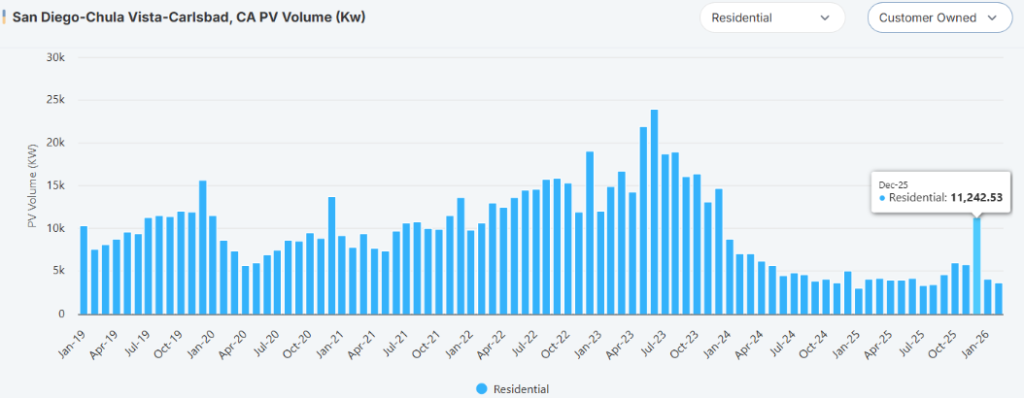
● The market saw a sharp contraction in 2024–2025, with many companies shrinking or exiting
● 2026 is shaping up to be one of the lowest-volume solar installation years in recent history
At the same time:
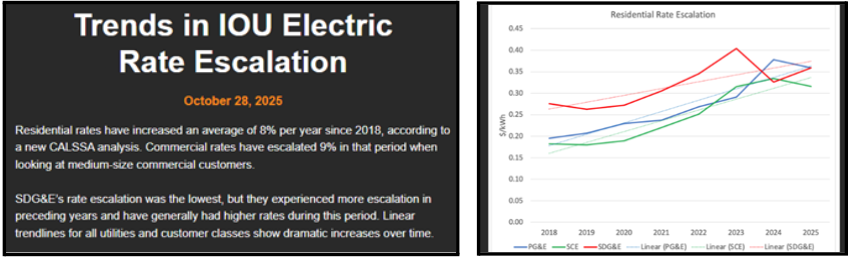
● Electricity rates have increased ~8% annually since 2018, doubling roughly every 7–9 years depending on rate structures
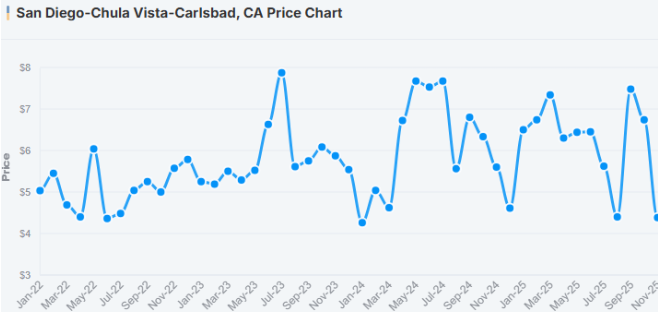
● The average solar PV cost/watt in 2025 ranged from $4.50 to $7.50 per watt, with regional averages around $6/watt, due to the 1kW CEC-AC add-on NEM Expansion limit.
What This Means for You
Despite market uncertainty, the fundamentals still favor energy investment:
● Utility rates continue to rise steadily and SDG&E is already the highest cost utility power in the U.S., at $0.91/kWh Peak Rate (EV-TOU).
● Battery adoption is increasing due to real-world reliability needs
● Incentives still exist—but are now more nuanced and tied to usage type
The key question is no longer just “Should I go solar?” but rather:
“How can I structure my system to maximize savings under current rules?”
Final Thoughts
2026 isn’t the easiest year to navigate solar decisions—but it may be one of the most strategic.
If you’re considering solar or battery:
● Evaluate whether any portion qualifies as business use
● Understand your rate plan and energy consumption patterns
● Act before key deadlines to preserve eligibility
The opportunity hasn’t disappeared—it’s just become more tailored.
There’s a variety of options available for Residential Business Use NEM Expansion, for existing solar. Green Energy EPC by Makello, Inc has many hundreds of Current Customers with Net Energy Metering registrations that are eligible for an Alumni Discount. Click on the option that best matches your add-on Solar Only, Solar-Battery, or Battery Only NEM Expansion cost summary, to see a contract that is available for you to fill out, sign and return by May 1, 2027. Of course, Makello.com will be glad to help you through the process.
| Solar Only | Solar & Battery | Battery Only | |
| 0% Business Use | 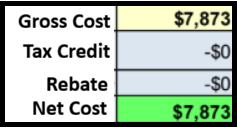 | 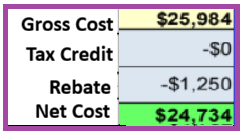 | 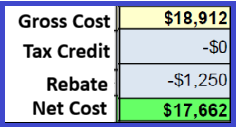 |
| 25 % Business Use | 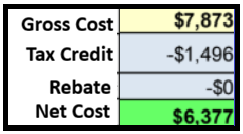 | 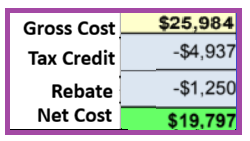 | 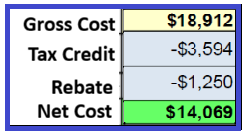 |
| 100 % Business Use | 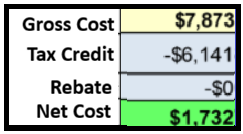 | 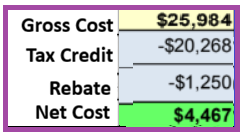 | 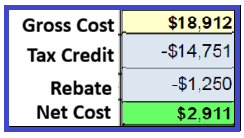 |
Remember you have until 2030 to build. You only need to pay a minimum of 5% before July 4, 2026 to Reserve your Solar Tax Credit and Depreciation incentives!